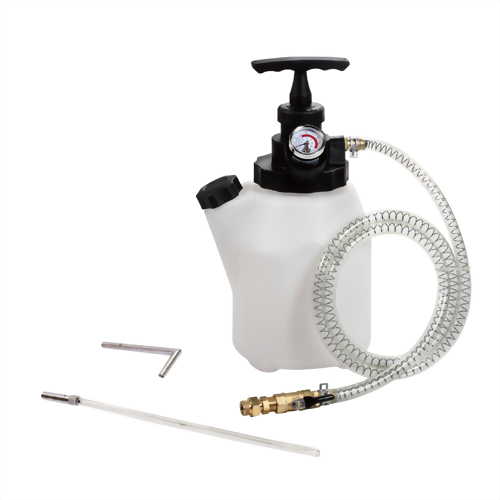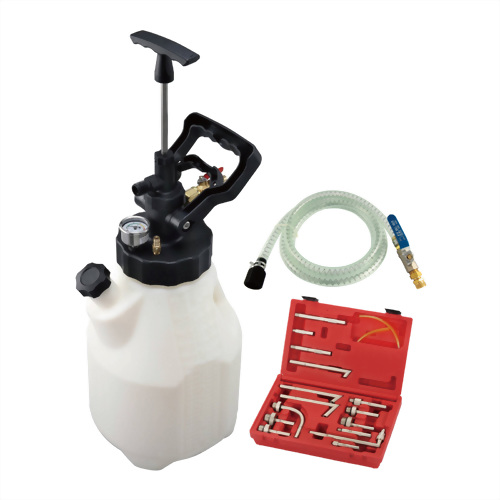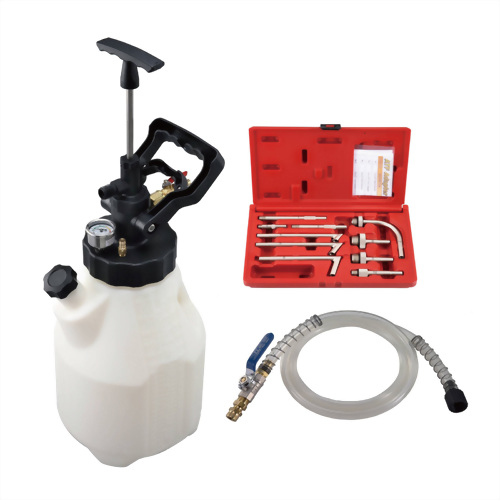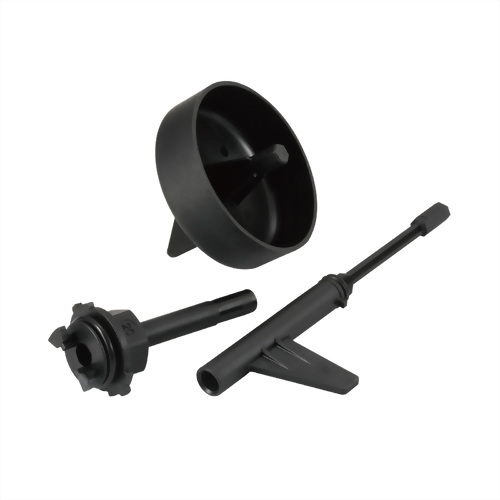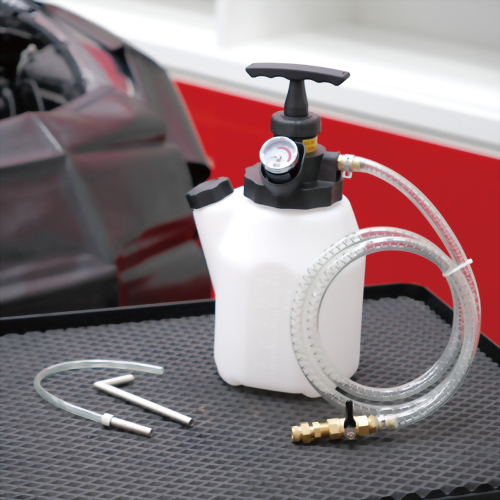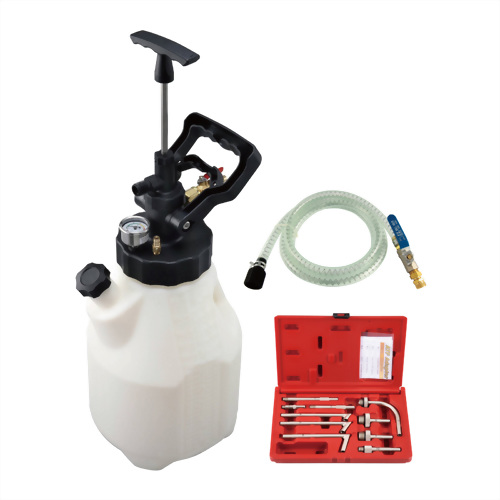

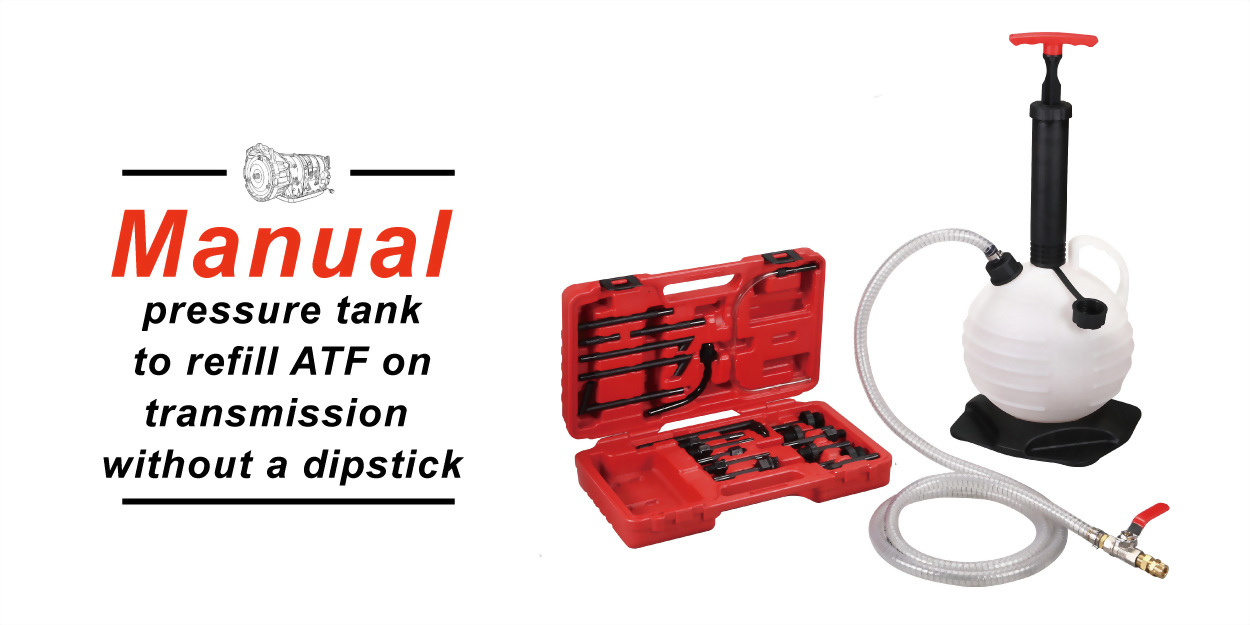
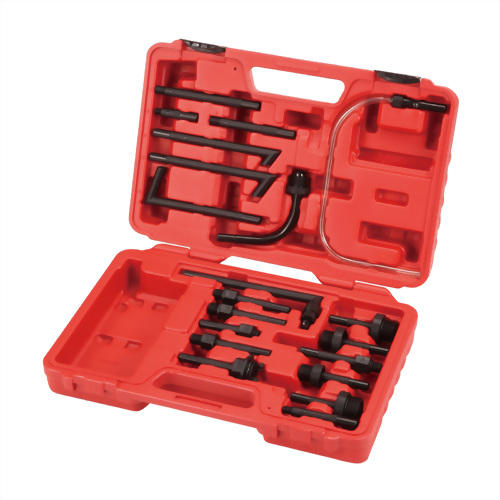
Manual ATF Filling Set (20 Adapters)
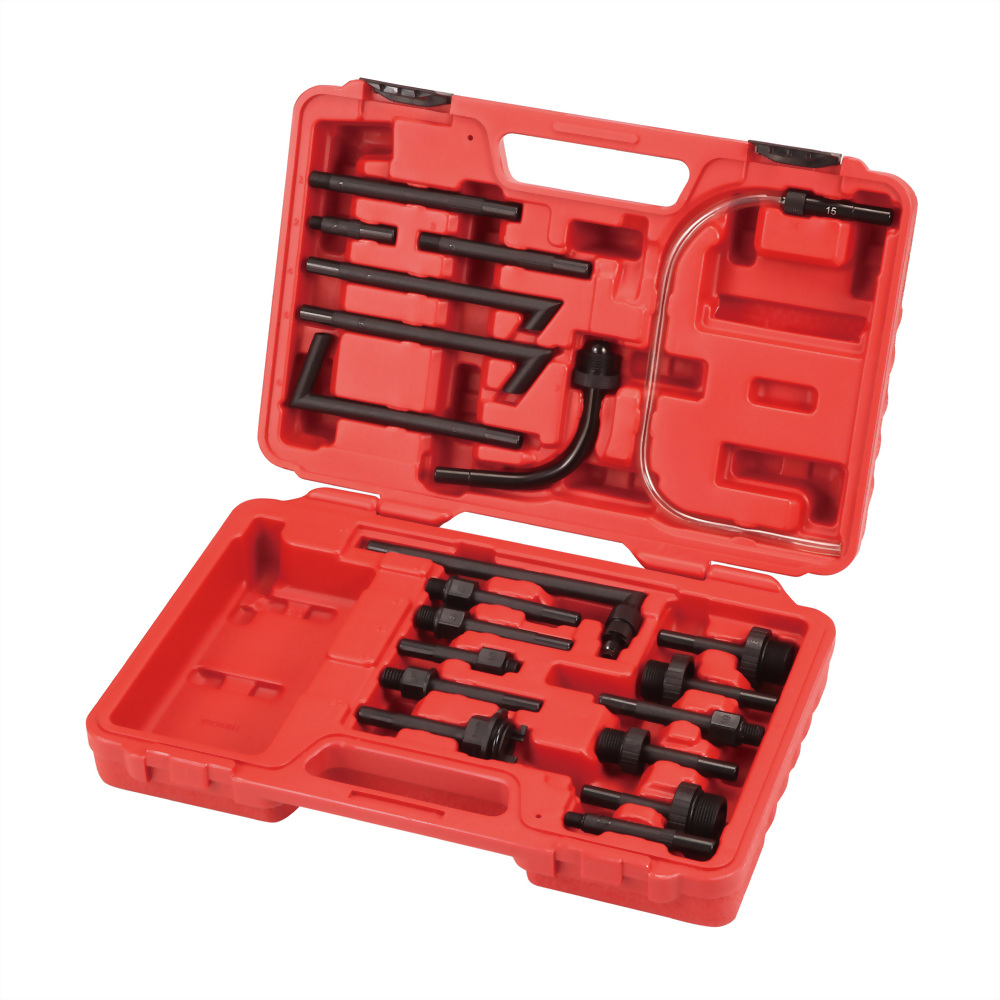
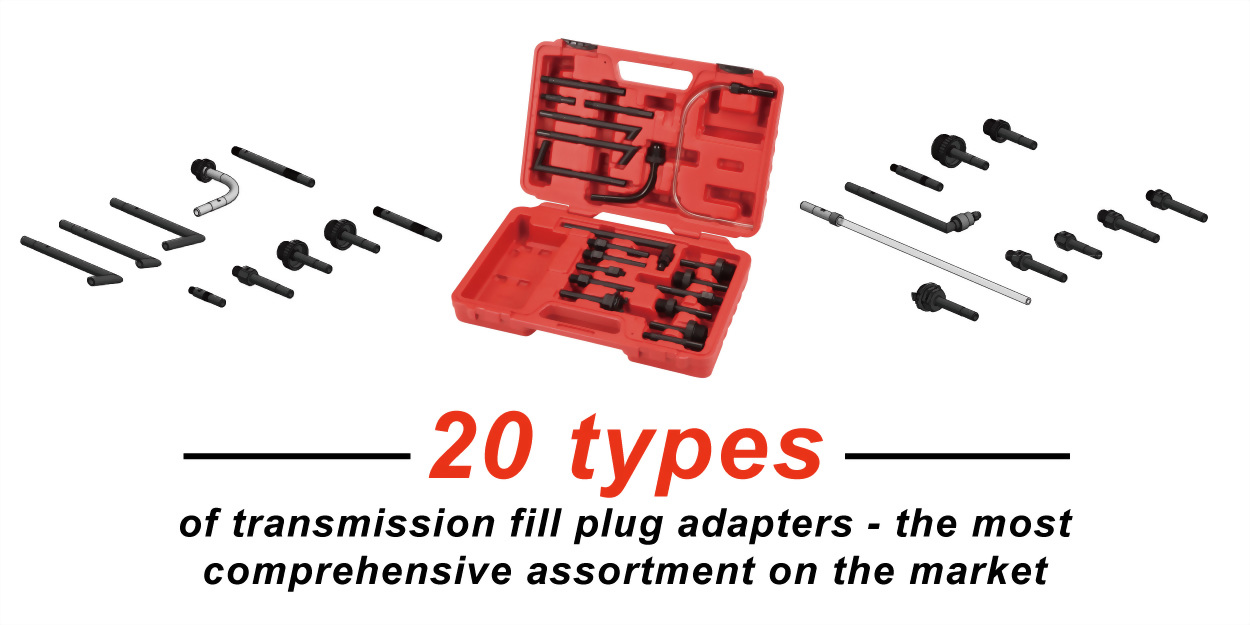
• Includes 20 adapters for most common vehicles
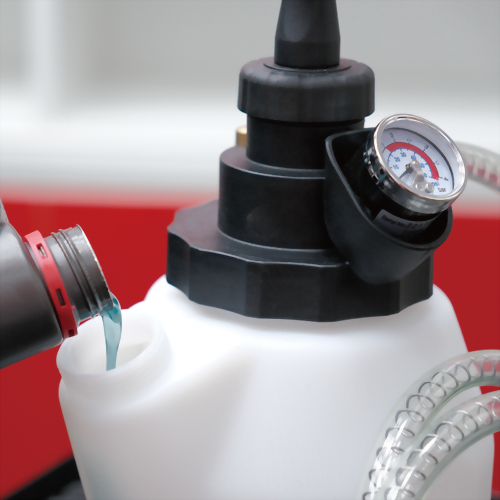
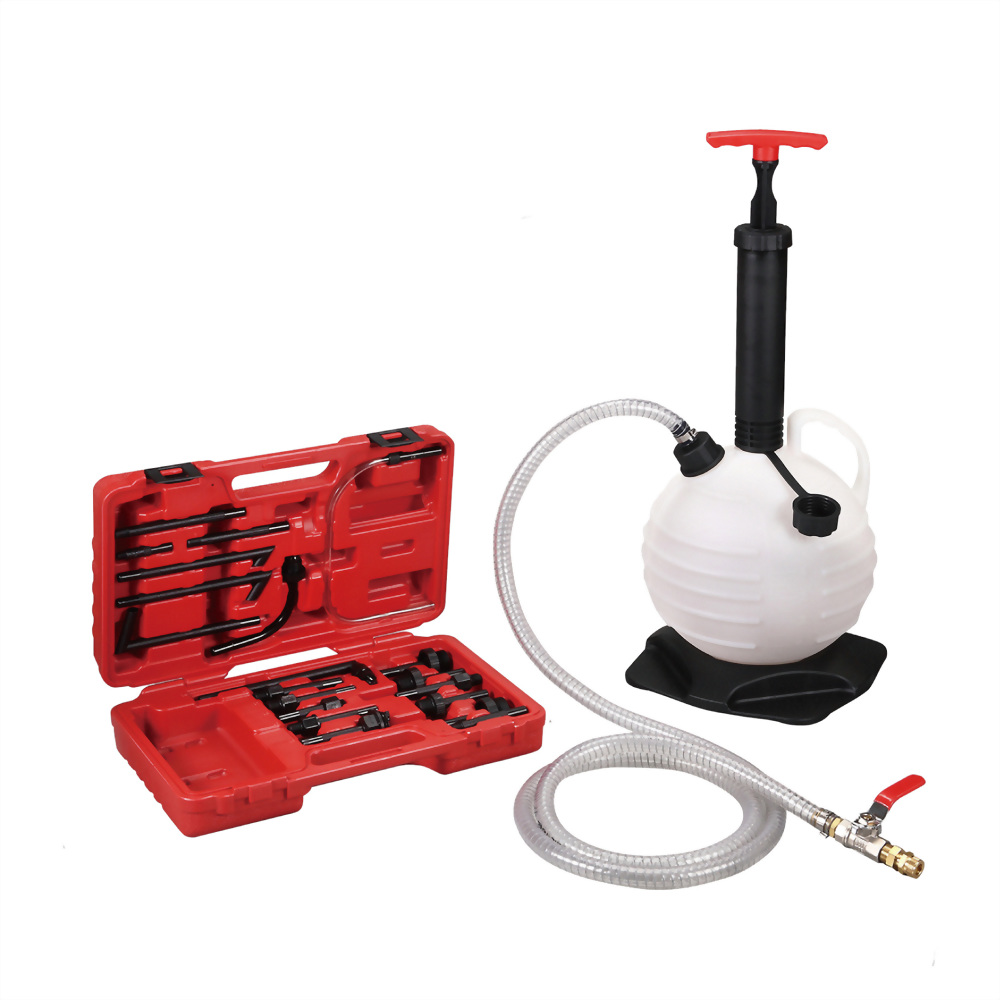
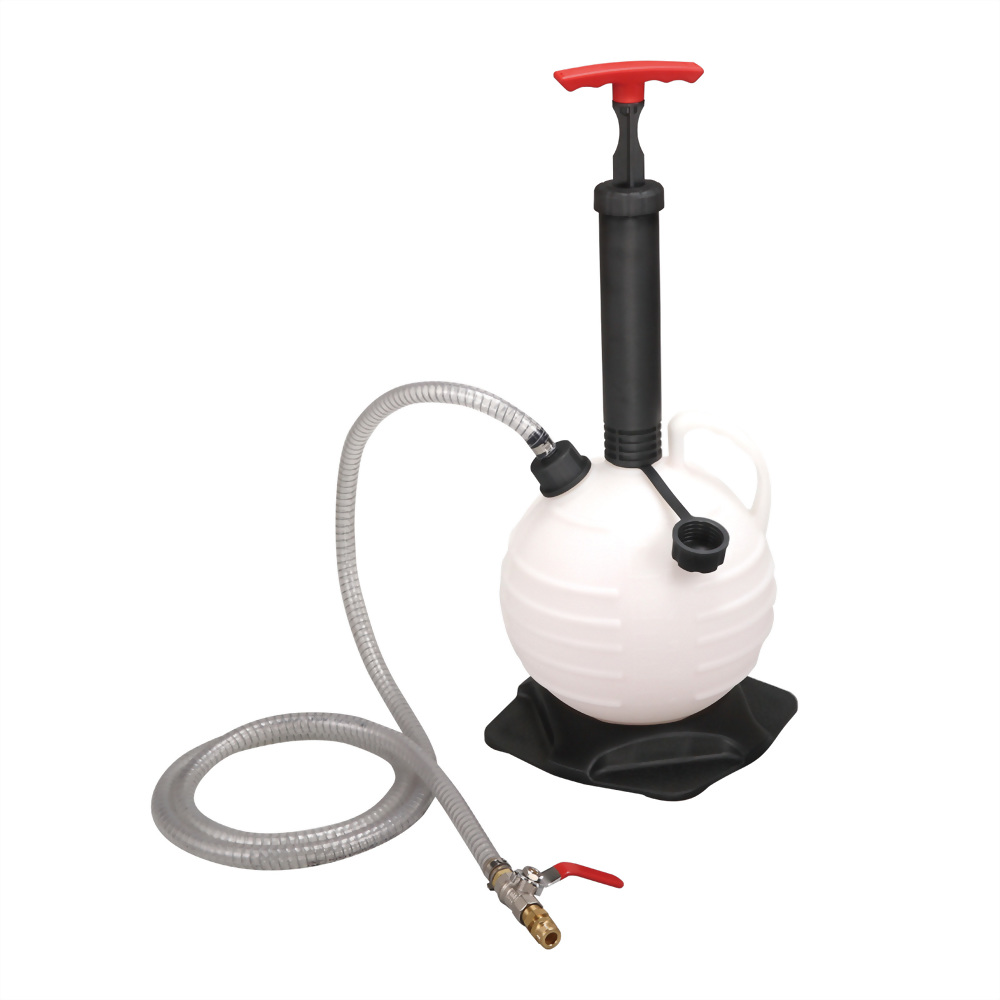
• Tank with 6 liter / quarts capacity, suitable for most transmissions - Audi, Cadillac, Ford, GMC, Infiniti, Mercedes, Nissan, Toyota, Volkswagen, and Volvo
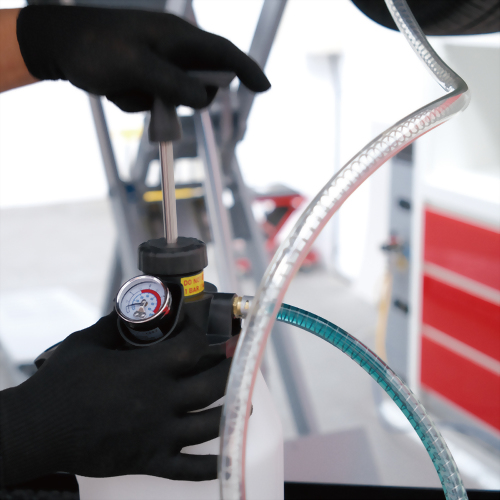
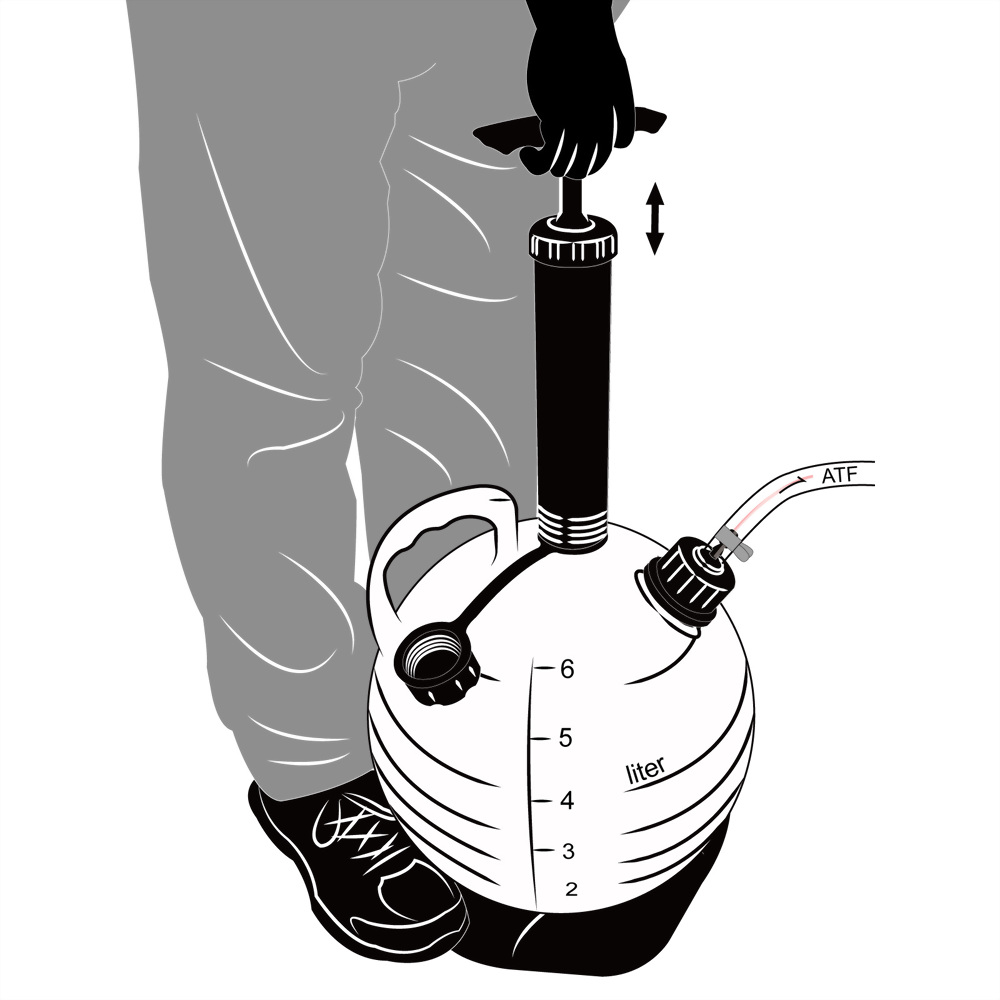
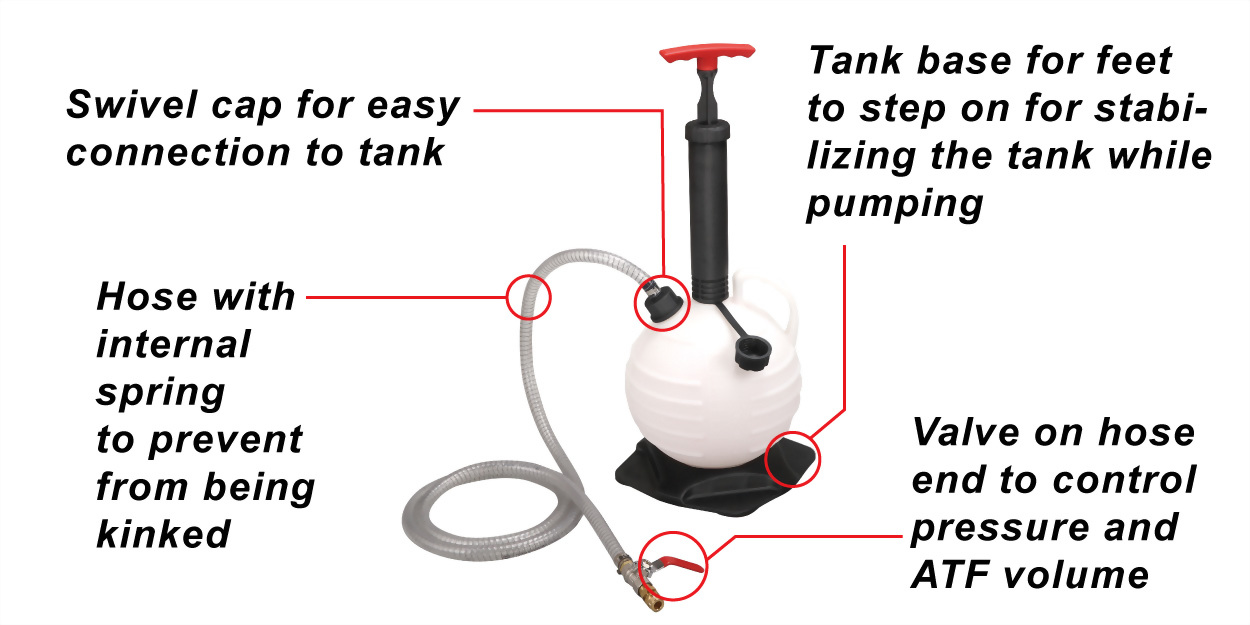
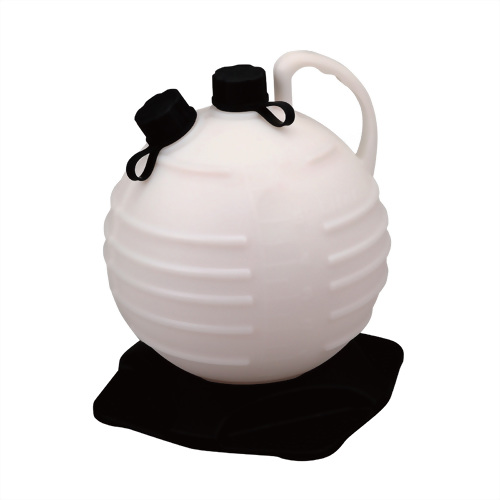
• Specially designed tank base for feet to step on to stabilize the tank while pumping
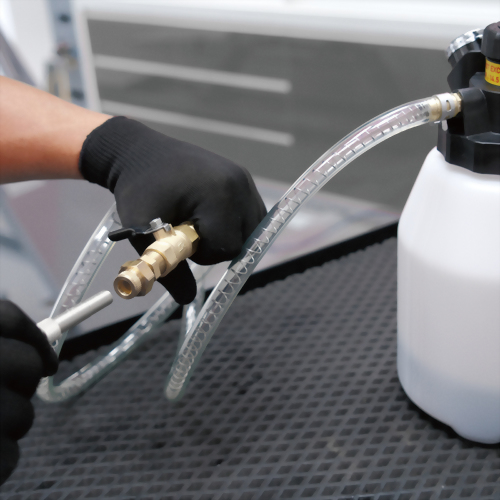
• Adapters in nylon 6-6 material provides lightweight but also durable features
Automatic Transmission Fluid (ATF) Filling Tool with Adapters
Changing the automatic transmission fluid (ATF) is an important maintenance task that helps ensure the longevity and proper functioning of your vehicle’s transmission. Here is a general step-by-step guide for changing ATF:
Materials Needed:
- Automatic transmission fluid (consult your owner's manual for the correct type and quantity)
- Transmission filter and gasket (if applicable)
- Drain pan
- Socket set and wrenches
- Screwdrivers
- Jack and jack stands or car ramps
- Clean rags or shop towels
- Funnel, or Cosda's SD-1582 if the transmission doesn't have a dipstick
- Torque wrench
- Safety glasses and gloves
Step-by-Step Guide:
1. Preparation:
- Park the Vehicle: Ensure the vehicle is on a flat, level surface. Engage the parking brake.
- Warm Up the Engine: Run the engine for a few minutes to warm up the transmission fluid, as warm fluid drains more easily.
- Safety First: Wear safety glasses and gloves to protect yourself.
2. Lift the Vehicle:
- Jack Up the Vehicle: Use a jack to lift the front of the vehicle and support it securely with jack stands, or use car ramps.
3. Locate the Transmission Pan:
- Find the Transmission Pan: Refer to your vehicle’s manual to locate the transmission pan.
4. Drain the Old Fluid:
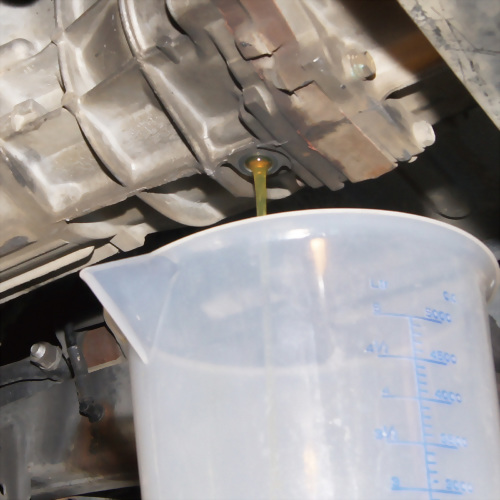
- Place the Drain Pan: Position a drain pan underneath the transmission pan to catch the old fluid.
- Remove the Drain Plug: If your transmission has a drain plug, remove it to allow the fluid to drain. If it doesn’t, you’ll need to remove the transmission pan bolts to drain the fluid.
- Remove the Pan: Carefully remove the bolts holding the transmission pan, allowing any remaining fluid to drain.
5. Replace the Filter (if applicable):
- Remove the Old Filter: If your transmission has a filter, remove it. Note its orientation for installing the new one.
- Install the New Filter: Install the new filter, ensuring it’s seated properly.
6. Clean the Pan and Install the Gasket:
- Clean the Pan: Thoroughly clean the transmission pan and the magnet inside the pan (if equipped) to remove any metal shavings or debris.
- Install the New Gasket: Place the new gasket on the transmission pan. Some gaskets may require a small amount of sealant, but refer to the instructions that come with the gasket.
7. Reinstall the Pan:
- Reattach the Pan: Reattach the transmission pan to the transmission with the bolts. Tighten the bolts in a crisscross pattern to the manufacturer’s torque specifications to ensure a proper seal.
8. Refill with New Fluid:
- Lower the Vehicle: Carefully lower the vehicle back to the ground.
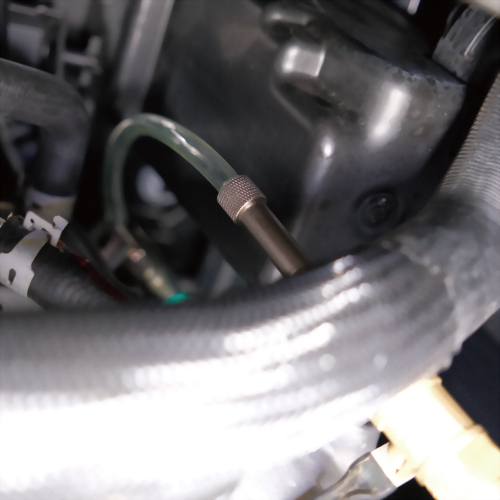
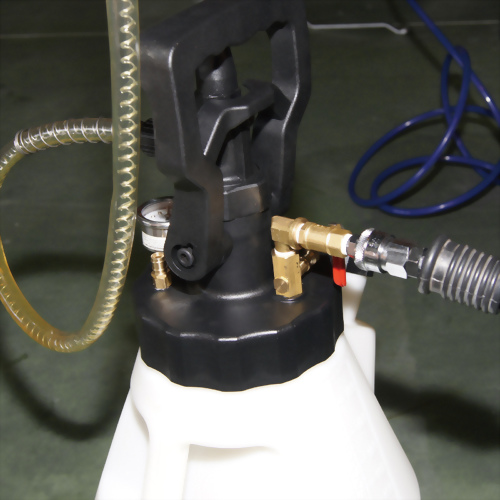
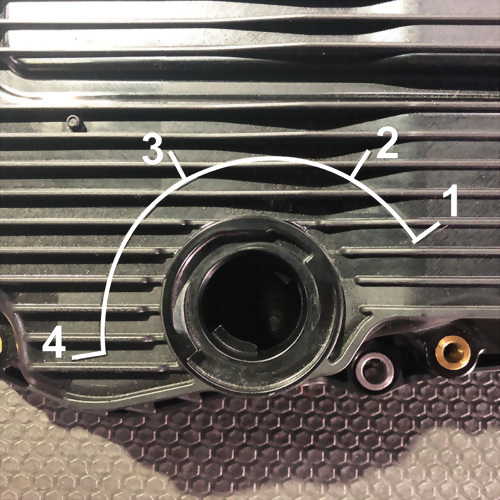
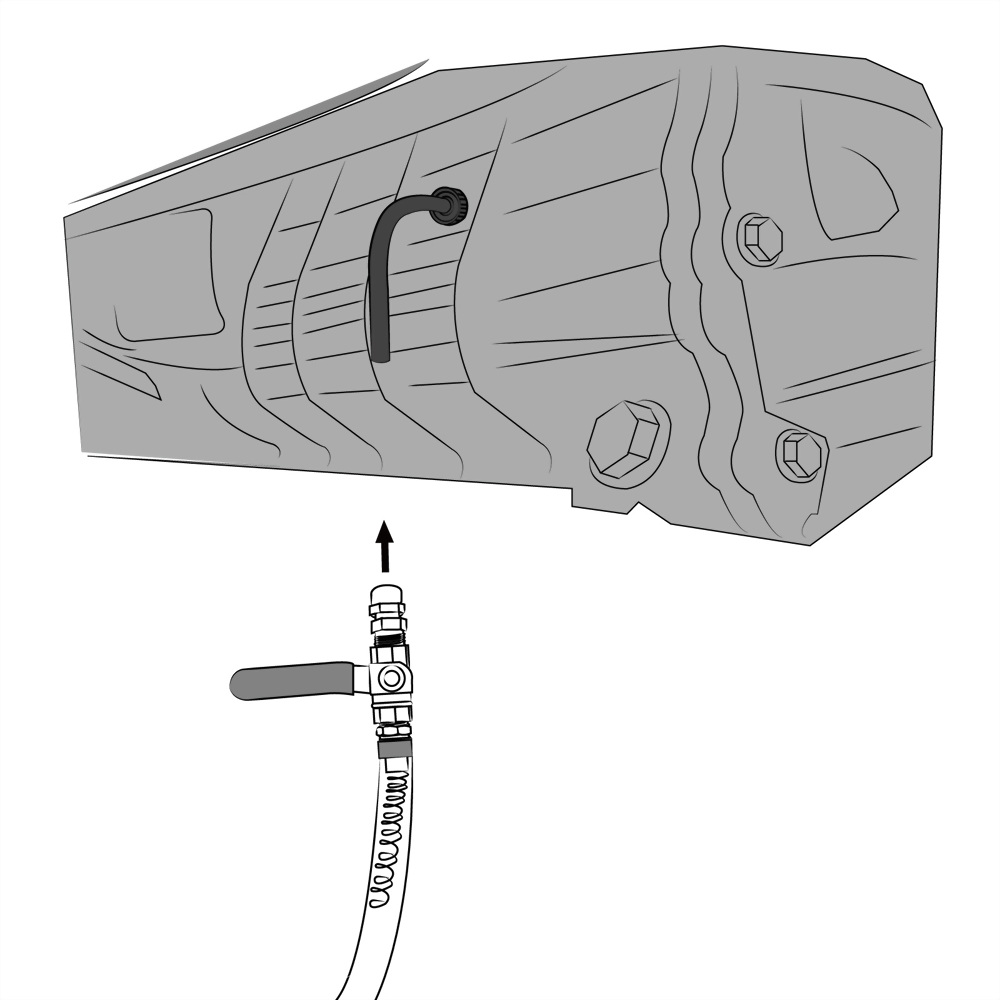
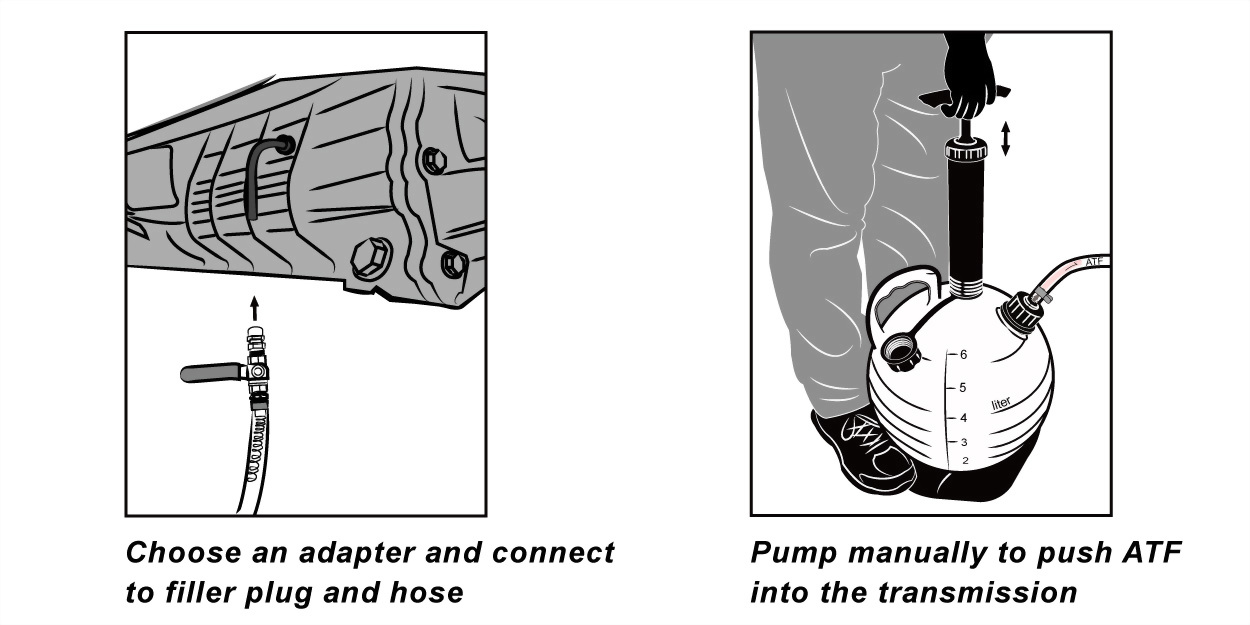
- Add New ATF: Locate the transmission dipstick tube (usually marked with a bright color). Using a funnel, add the new ATF through the dipstick tube. Refer to your owner’s manual for the correct type and amount of fluid. If the transmission does not have a dipstick, then using this SD-1582 will help you alleviate a headache. This tool set has 20 adapters that can fit to a wide variety of transmission drain plug or fill plug holes, and by pressurising the tank that has been filled with ATF inside, the pressure will push the ATF to the transmission, enabling the ATF refilling easy and fast.
9. Check the Fluid Level:
- Start the Engine: Start the engine and let it run for a few minutes. Shift through all the gears, then back to Park.
- Check the Level: With the engine running and the transmission in Park, check the fluid level on the dipstick. Add fluid if necessary to reach the appropriate level.
10. Dispose of the Old Fluid:
- Proper Disposal: Take the old transmission fluid to a recycling center or automotive store that accepts used oil and fluids.
Tips and Warnings:
- Always consult your vehicle’s owner’s manual for specific instructions and specifications related to your vehicle.
- Avoid overfilling the transmission, as this can cause damage.
- Ensure you use the correct type of transmission fluid recommended for your vehicle.
- If you're unsure about performing this task yourself, consider having it done by a professional mechanic.
Regularly changing your automatic transmission fluid can help maintain smooth operation and extend the life of your transmission.
KEY FEATURES
1. Built
for dipstick-free automatic transmissions—solves modern service pain points
Designed for the common “sealed / no-dipstick”
automatic transmissions found on many post-2000 vehicles. SD-1582 uses manual
pressurization to deliver ATF steadily through the fill/overflow port, making
refilling faster and more controllable.
2. 6L
high-capacity manual pressure tank—one fill covers most jobs
The 6L (approx. 6 qt) tank capacity meets the
needs of most transmission service refills. Manual pumping requires no shop
air, making it ideal for service bays and mobile/on-site support.
3. 20
high-coverage adapters—one kit for multiple vehicle brands
Includes 20 adapters designed to match common
fill port specifications, improving first-time fitment and reducing downtime
caused by incompatible adapters—especially valuable for multi-brand repair
shops and fleet maintenance.
4. Foot-stabilized
base—safer, steadier one-person operation
The base is designed to be held in place with
your foot while pumping, minimizing tank movement and hose pull for stable,
efficient, one-person refilling.
5. Nylon
6-6 (PA66) adapters—lightweight and durable for frequent use
Adapters are made from Nylon 6-6 (PA66),
balancing low weight with durability—well suited for repeated installation and
removal in daily workshop use.
6. More
consistent fluid delivery—helps reduce aeration and level-reading errors
Correct ATF servicing depends on the proper
temperature window and accurate level checks. Stable fluid delivery helps
reduce aeration/foaming and improves consistency when following OE temperature
and overflow-level procedures, supporting reliable lubrication and cooling
performance.
The Functional Role of Automatic Transmission Fluid (ATF)
In modern automatic transmissions, Automatic Transmission Fluid (ATF) is not merely a lubricant. It functions as a critical operational medium that directly enables the transmission system to work as designed. Unlike manual transmissions, automatic transmissions rely extensively on fluid dynamics to manage power transfer, gear engagement, and control logic.
ATF serves multiple essential roles simultaneously. It acts as a hydraulic medium that transmits pressure through valve bodies and internal oil passages to control clutch and brake engagement. It also regulates friction behavior, as the fluid’s friction characteristics directly influence shift timing and shift quality. In addition, ATF absorbs heat generated during operation and transports wear particles to the filter or magnetic collection points within the transmission.
As a result, the condition of ATF affects more than just smoothness. It has a direct impact on whether the transmission can execute gear changes accurately and consistently. Any change in viscosity, friction coefficient, or contamination level alters hydraulic response and control precision. This is an inherent characteristic of automatic transmission design, not a matter of driving style or maintenance preference.
Why Automatic Transmission Fluid Requires Periodic Replacement
During normal operation, ATF is continuously exposed to high temperatures, shear forces, and repeated pressure fluctuations. Over time, these conditions cause unavoidable degradation of the fluid’s properties. Oxidation, additive depletion, and the accumulation of fine wear particles gradually reduce the fluid’s ability to perform its intended functions.
The increasing adoption of “sealed” or dipstick-free transmission designs has led to the misconception that transmission fluid does not require replacement. In reality, the absence of a dipstick is primarily intended to limit incorrect servicing and improve manufacturing consistency. It does not eliminate fluid aging or extend the physical lifespan of the oil.
When ATF performance declines, the earliest symptoms are rarely immediate mechanical failure. Instead, reduced hydraulic responsiveness, inconsistent shift quality, and increased reliance on electronic compensation strategies are commonly observed. From an engineering perspective, these behaviors reflect the transmission control system adapting to changes in fluid condition rather than operating under its original design parameters.
Therefore, the need to replace automatic transmission fluid is not a subjective maintenance choice. It is a direct consequence of fluid degradation under real-world operating conditions—an unavoidable reality in any hydraulic-based transmission system.
Solutions
Manual ATF Filling Tool Set with Adapters
Automatic Transmission Fluid Filling Tools
This page outlines OEM and private label customization solutions for manual ATF filling tool sets, designed for automotive tool brands, transmission service providers, and professional workshops.
Solution 1 – Logo-Printed Manual ATF Pump for Private Label Programs
Turn a manual ATF pump into a logo-printed transmission fluid filling tool for automotive tool brands, private label programs, and distributors.
Key Benefits:
- The manual ATF pump can be printed with your logo, creating a branded transmission fluid filling tool for daily workshop use.
- Logo printing requires an MOQ of 120 sets and involves a one-time tooling cost.
- A branded manual ATF pump becomes a long-term brand touchpoint during routine automatic transmission service work.
Solution 2 – Custom Labeling for Blow-Molded ATF Tool Case
Customize the blow-molded case of the ATF filling tool set with brand-specific labeling for clear identification and professional presentation.
Key Benefits:
- The tool case can be customized with branded stickers showing your logo and product information.
- Customers may provide their own label artwork, or we can assist with complimentary label design.
- Ideal for ATF filling tool kits, transmission service tools, and OEM packaging programs.
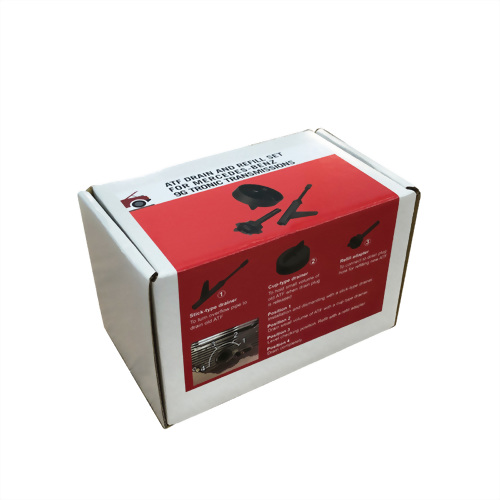
Solution 3 – Color Box Packaging Options for ATF Filling Kits
Choose flexible color box packaging solutions to match different sales channels and brand positioning.
Key Benefits:
- A standard color box is available for fast market entry and general distribution.
- Customers may also use their own custom color box design for private label ATF filling tool sets.
- Suitable for retail channels, e-commerce platforms, and automotive tool distributors.
Solution 4 – Multi-Adapter ATF Filling Tool Set for Transmission Service
The manual ATF filling tool set with adapters supports a wide range of automatic transmission applications.
Key Benefits:
- Multiple ATF adapters allow compatibility with different automatic transmission systems.
- Designed for professional transmission service, automotive workshops, and fleet maintenance.
- Helps establish a standardized transmission fluid filling solution across service operations.
Solution 5 – OEM & Multi-Market ATF Filling Tool Solutions
Support OEM projects and multi-market distribution with flexible branding and packaging options for ATF filling tools.
Key Benefits:
- Branding, labels, and packaging can be adjusted to meet different market requirements.
- Ideal for distributors and OEM customers operating across multiple regions.
- Keeps the core ATF filling tool structure consistent while supporting global sales programs.
Q&A
Q1. Does it require an air compressor or other equipment?
A: No. SD-1582 is a manual-operated pressure system. By pressurizing the tank manually, ATF is pushed into the transmission for easier refilling.
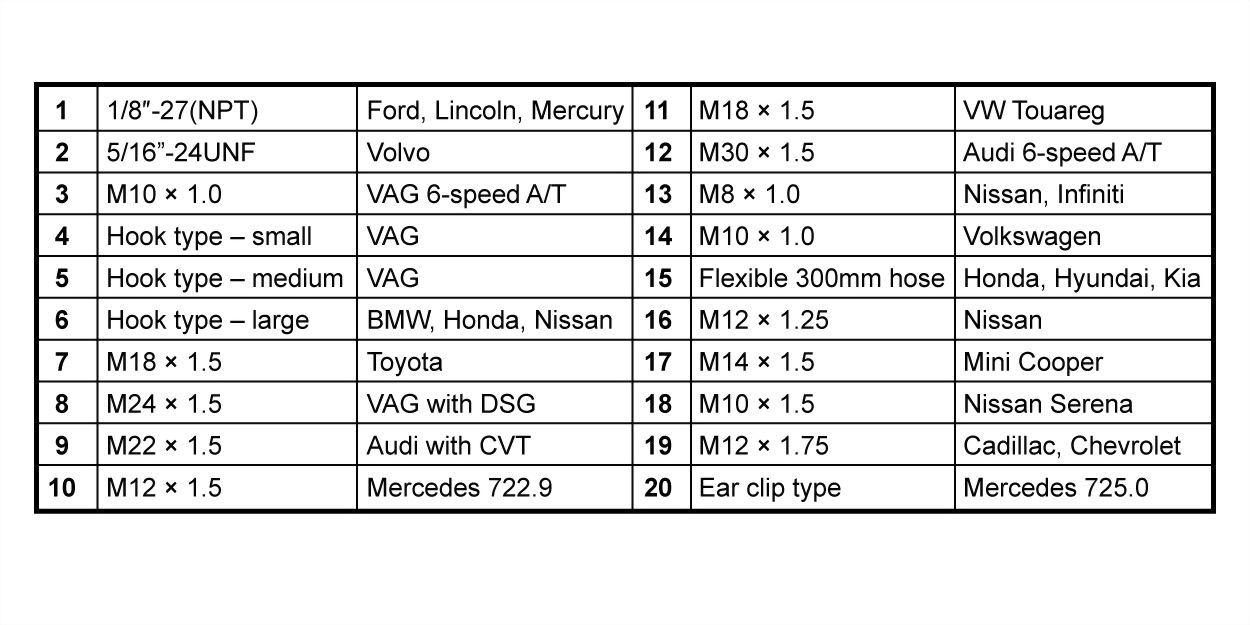
Q2. How do I know which adapter fits my vehicle?
A: The product page provides a vehicle fitment list showing the corresponding Adapter No., with remarks for different transmission types (e.g., CVT, 6-speed AT, 6-speed dual clutch).
Q3. Why does the tank base allow stepping on it?
A: The base is designed for foot stabilization, helping keep the tank steady while pumping for improved stability and efficiency.
Q4. What basic precautions should be followed?
A: The page advises to follow the vehicle manual for correct ATF type/quantity, avoid overfilling, wear gloves and safety glasses, and have the job performed by a professional if unsure.
Q5. What are the packing specs, and is logo customization available?
A: The
manufacturer lists Color box packaging
and 4 sets per master carton, along with
set/carton dimensions, weights, and CBM for shipping estimation.
If you only need the adapters, Cosda also offers SD-1582-ATA (20-pc adapter set) separately; its page
lists MOQ, logo printing, and tooling terms.
| Package | Color box | |
| Packing | 4 sets in a master carton | |
| Weight per set | 3.4 g | 7.5 lbs |
| Net weight per carton | 13.6 kg | 29.9 lbs |
| Gross weight per carton | 14.6 kg | 32.1 lbs |
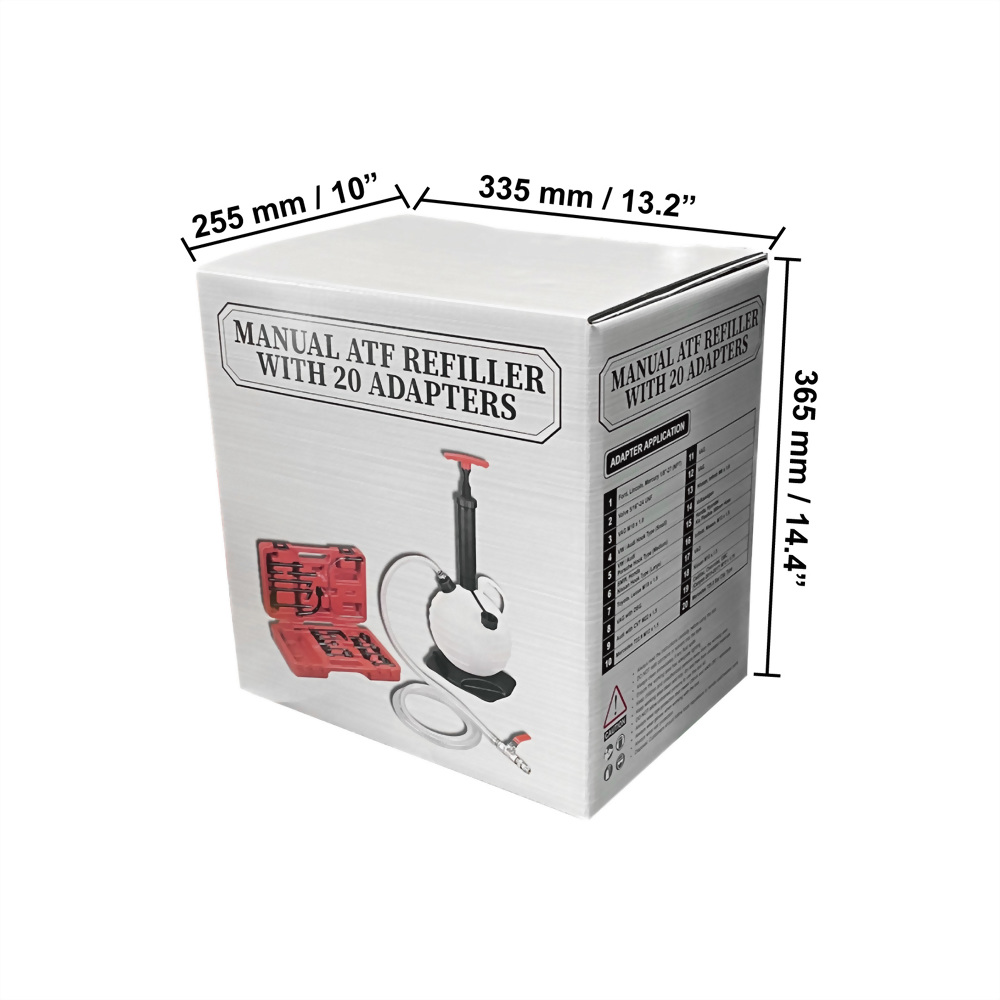
| Size per set | 33.5 × 25.5 × 36.5 cm | 13.2 × 10.0 × 14.4 in |
| Size per carton | 70.0 × 54.6 × 38.8 cm | 27.6 × 21.5 × 15.3 in |
| Volume per carton | 0.15 CBM | 5.2 CUFT |

| Suggested HS code |
84132000001 |
| MOQ without logo printing | 12 sets |
| Logo printing cost | + TWD 6 with an MOQ of 150 sets |
| Logo printing tooling cost | + TWD 2,000 |
|
Not for sale in |
China |