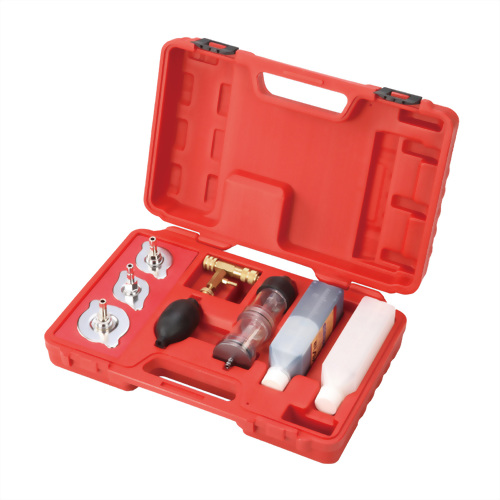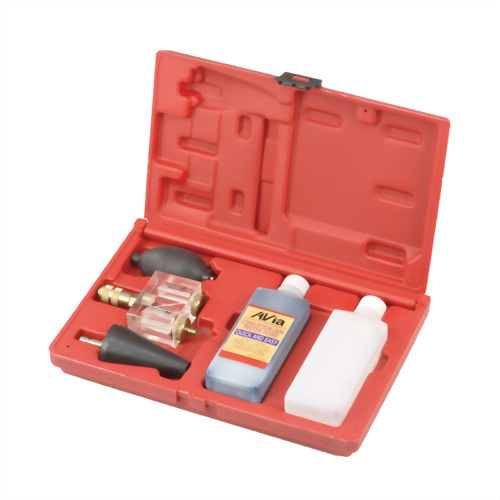

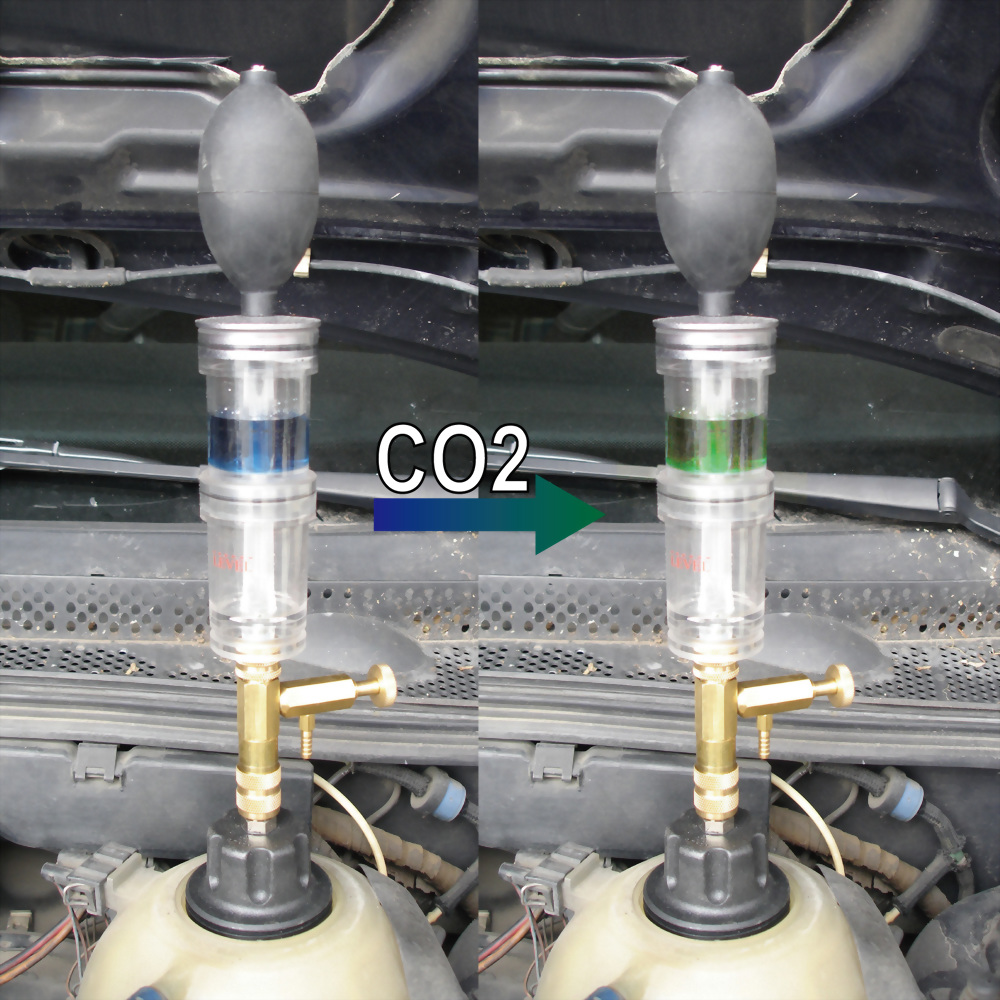
Combustion Gas Leak Tester Kit
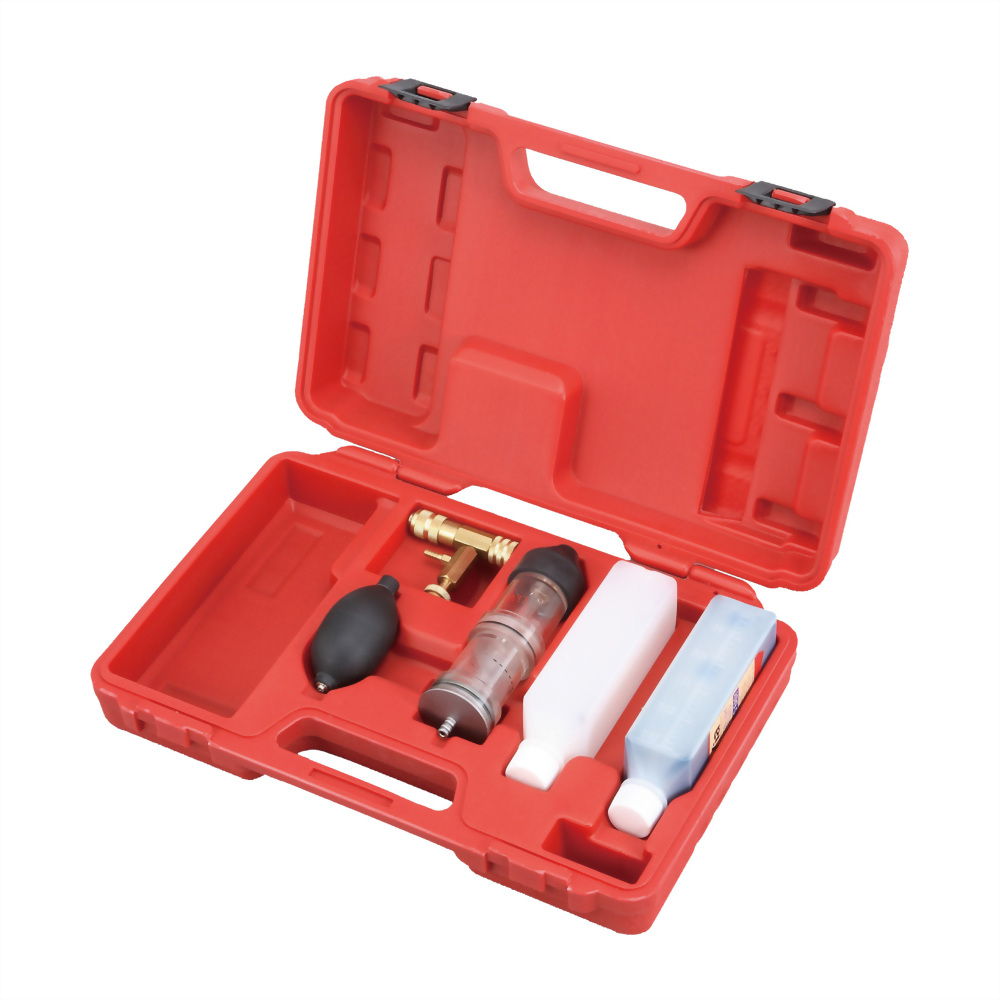
• Includes US-made CO2 tester fluid
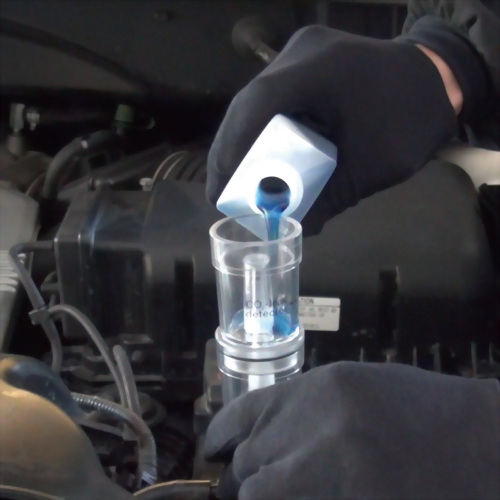
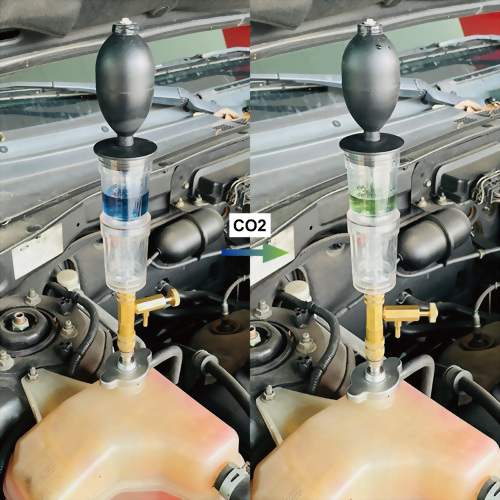
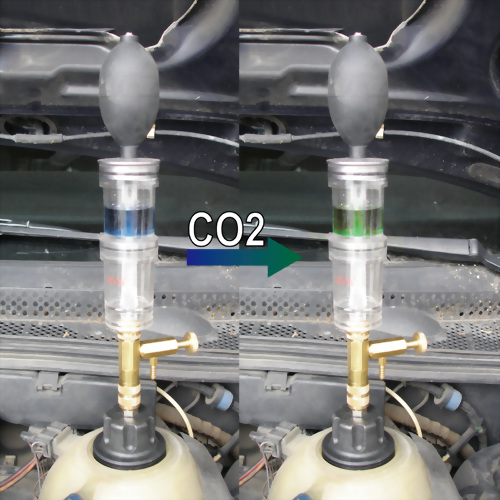
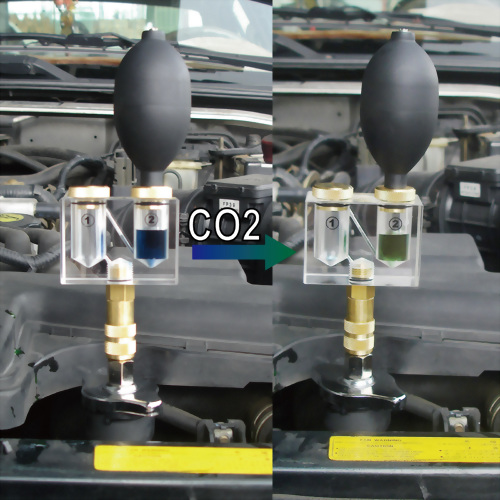
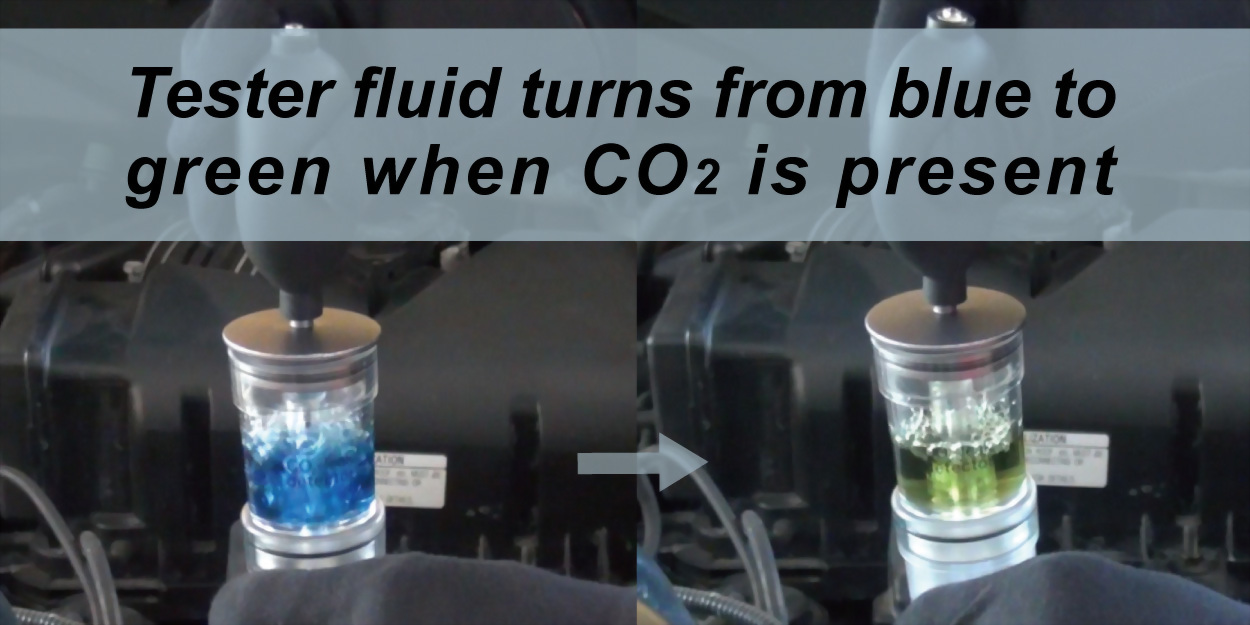
• Tester fluid changes from blue to green or yellow if CO2 is present in coolant
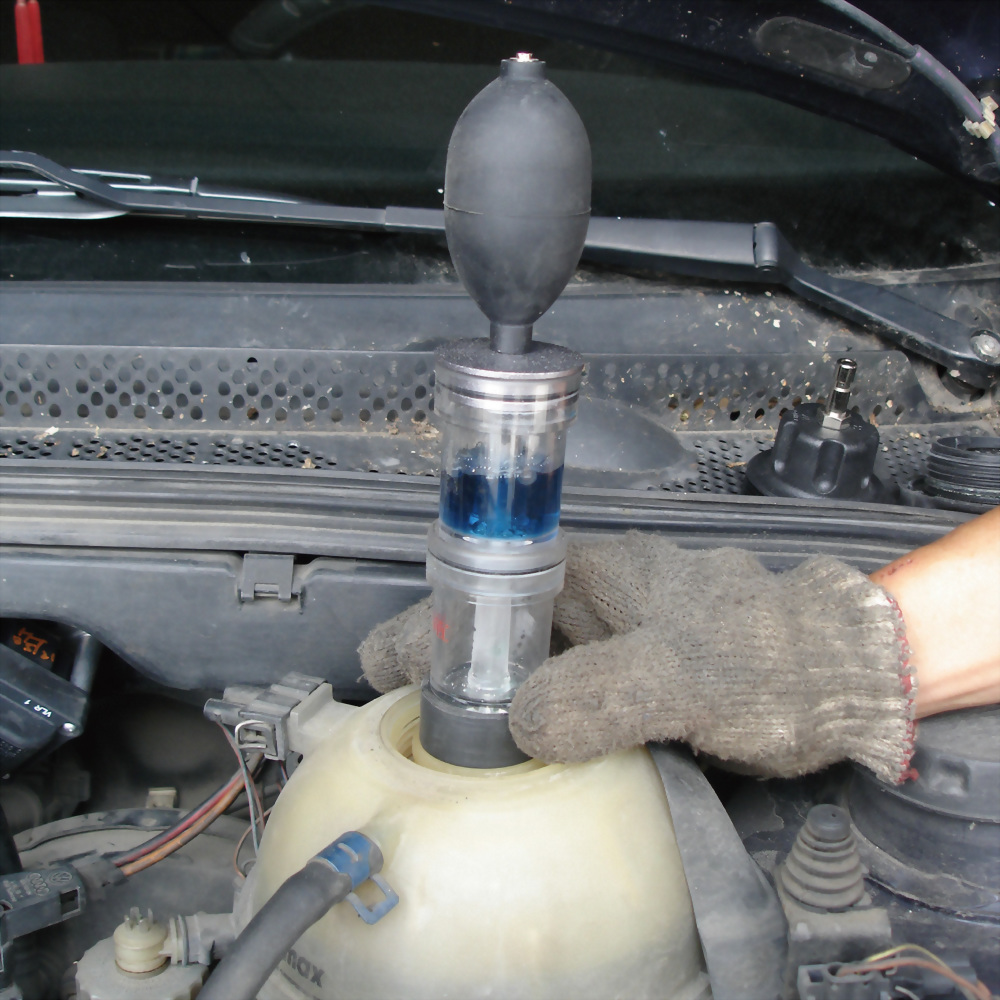
• Rubber bulb helps draw vapor from radiator into test chambers
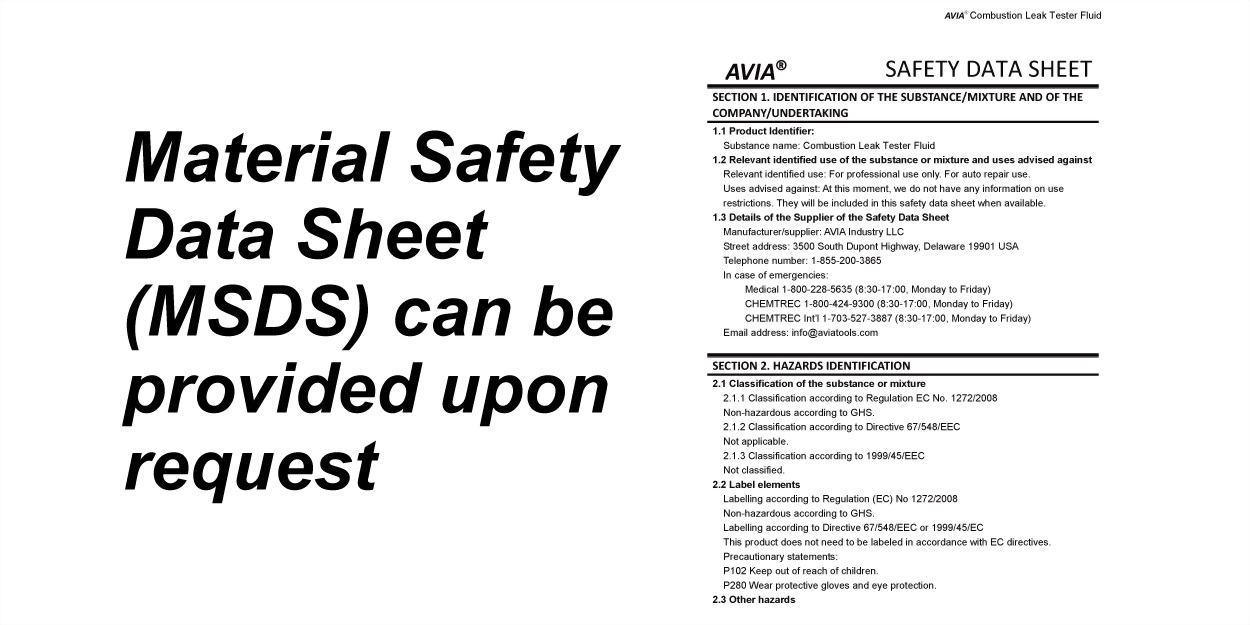
• Tester fluid with MSDS and SVHC compliance
Combustion Gas Leak Tester Kit for Engine Diagnostics | OEM Automotive Tool Manufacturer
- Gas Leak Detection for Automotive Engines and Cooling Systems
- High Sensitivity Combustion Gas Detection with Fast Results
- OEM and Custom Automotive Diagnostic Tools Available
- High-Quality Materials with Reliable Testing Performance
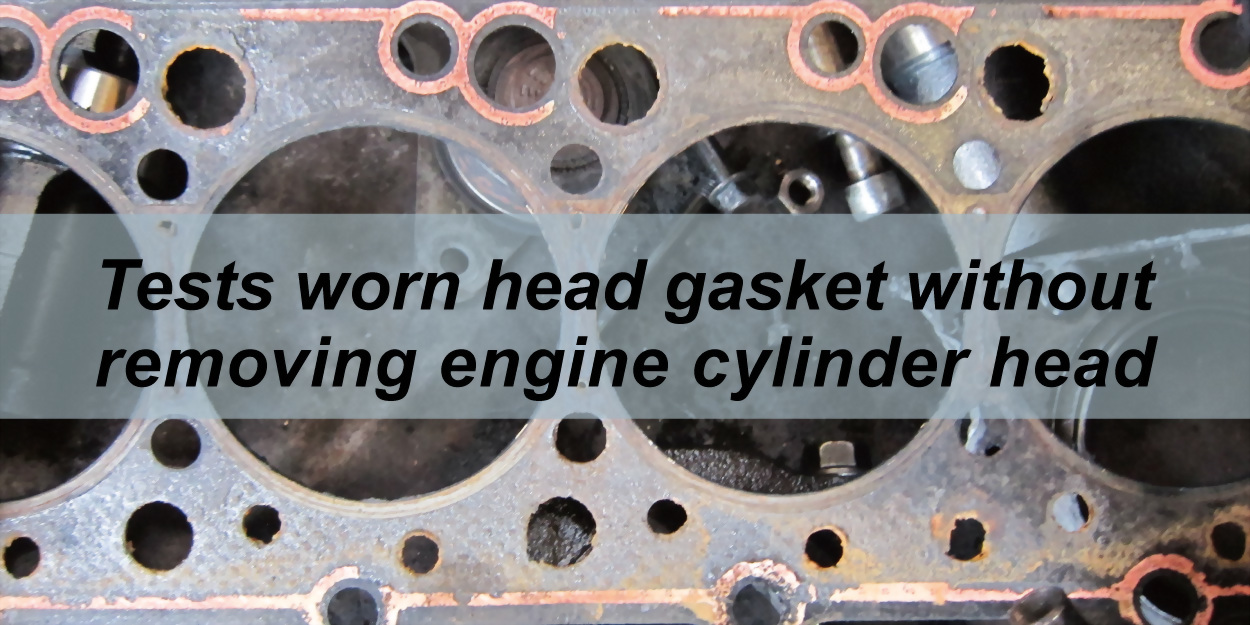
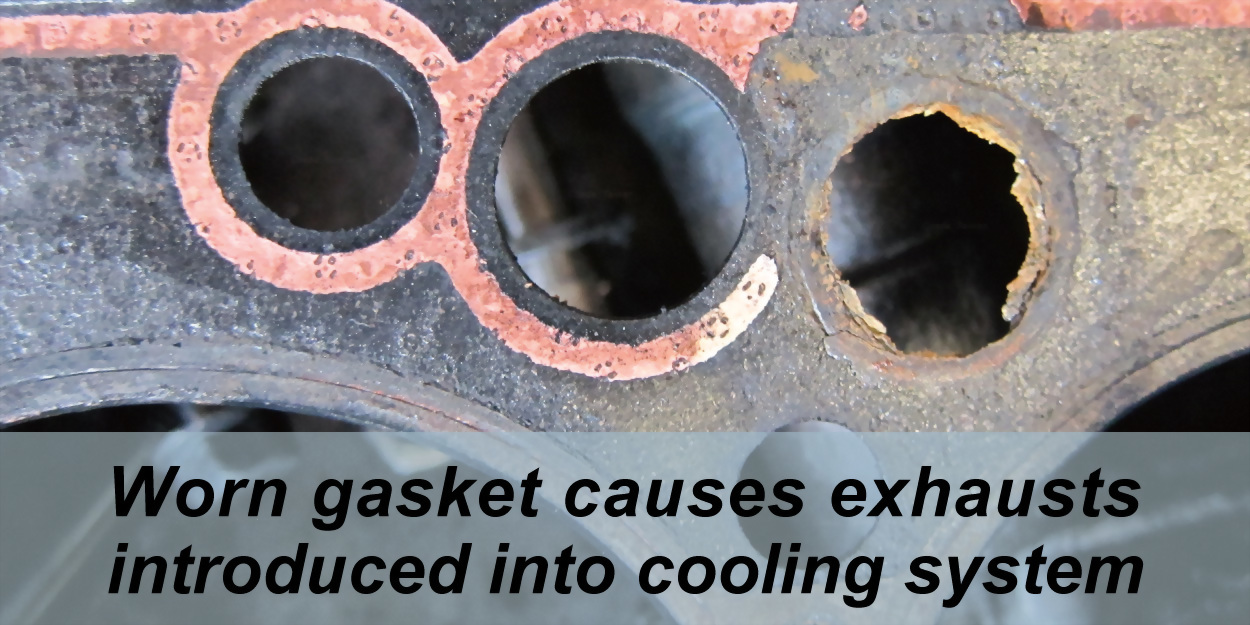

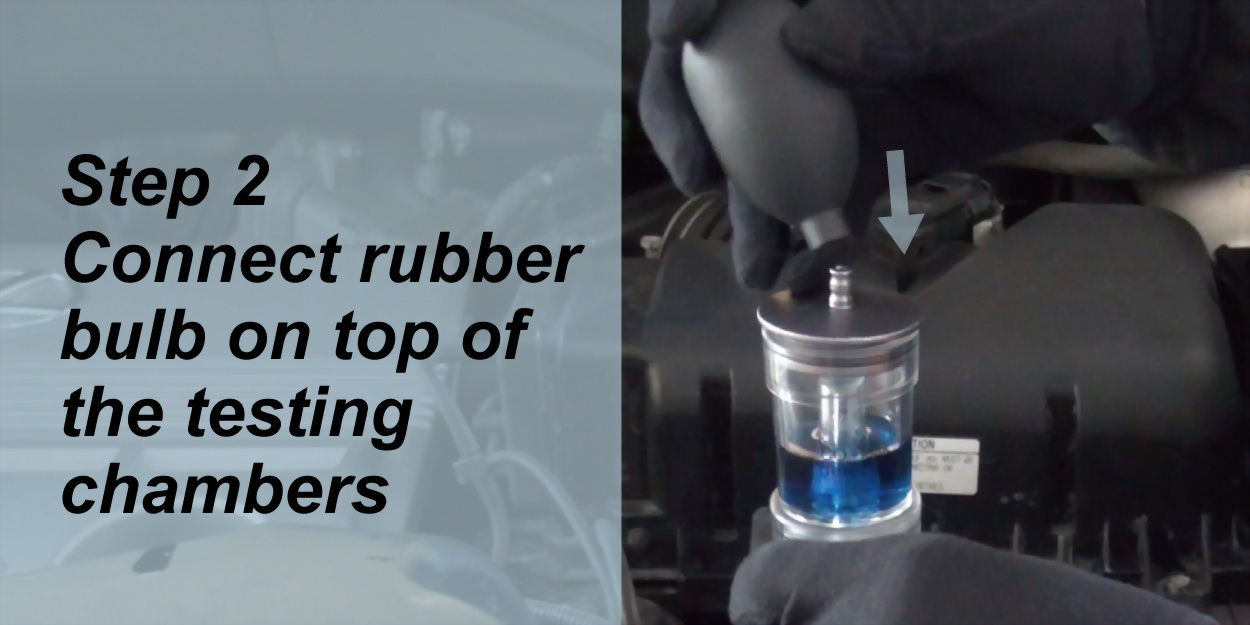
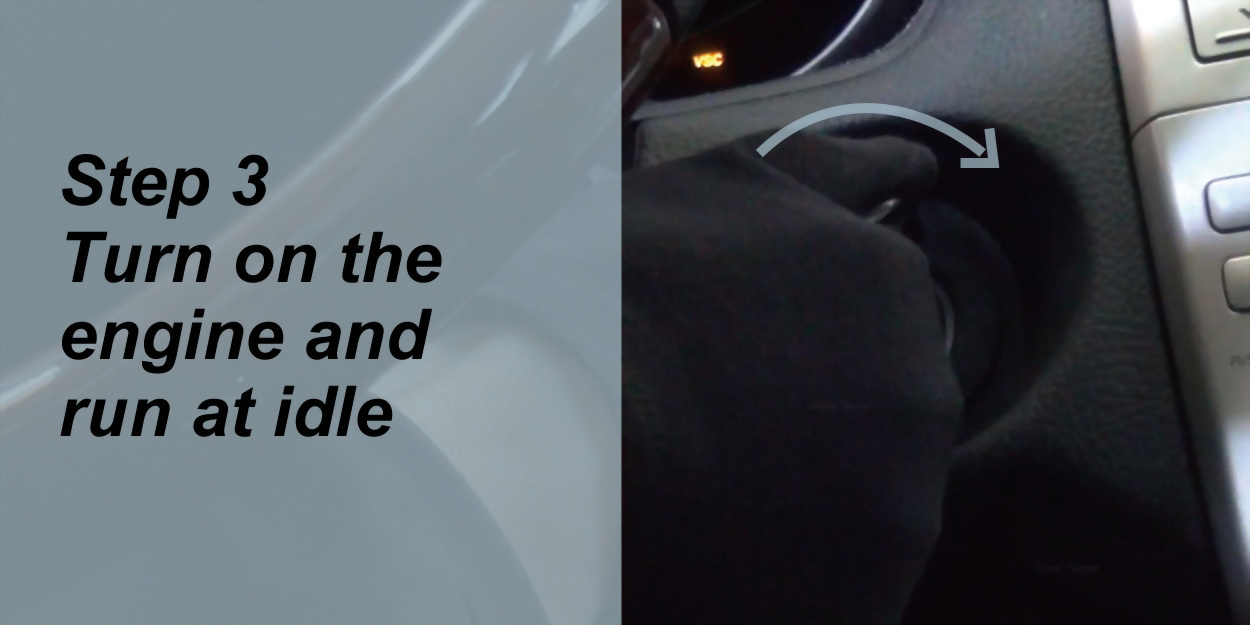
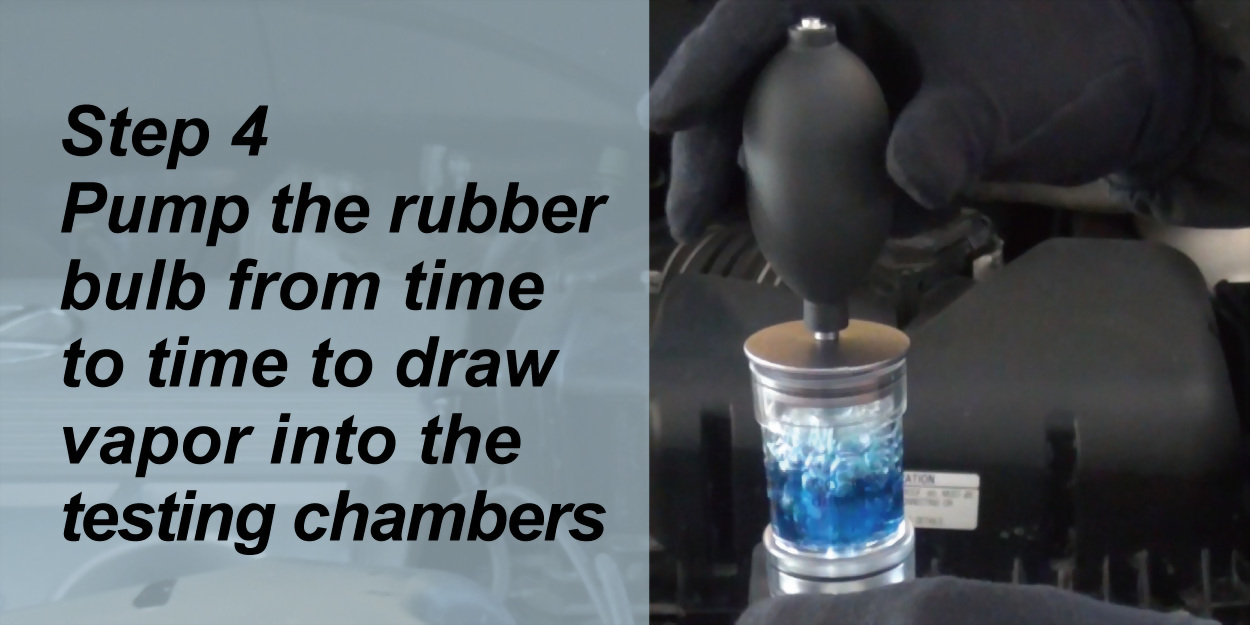
This tool is an interesting and useful one. Without dismantling the cylinder head, you can already check if the gasket is worn out. Dismantling the cylinder head is a tiresome job because there are many parts involved and you’ll also need to perform timing adjustment. Such a pain.
The worn out gasket causes leaks of the coolant or engine oil, or having coolant going into the lubrication system that causes the engine oil has a look just like cappuccino, or Café Crème if you are fancy. It is a vicious cycle because the decreased ability for the engine oil to lubricate engine parts will lead to several other problems in the long run.
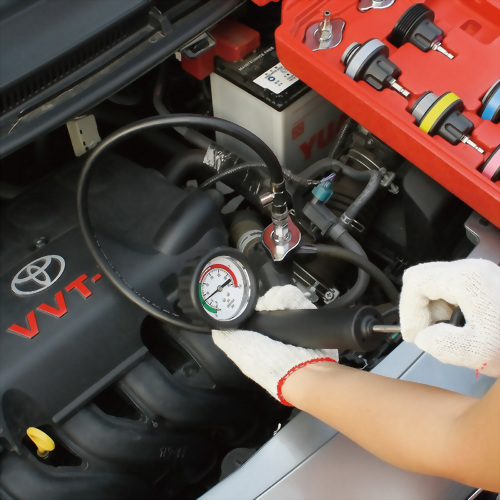
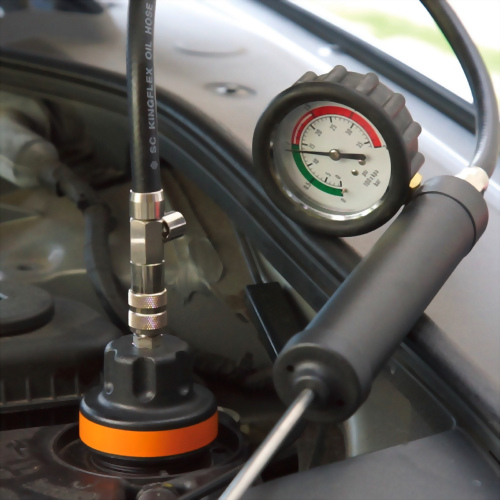
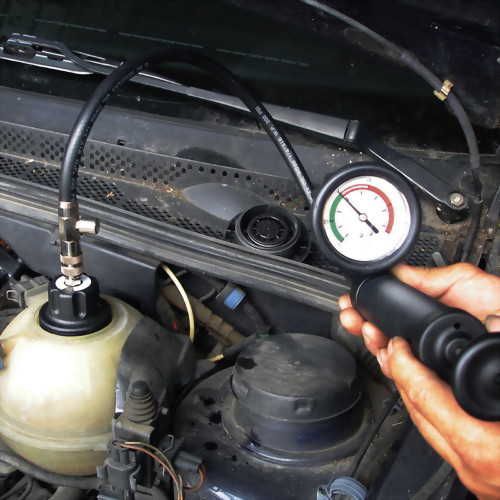
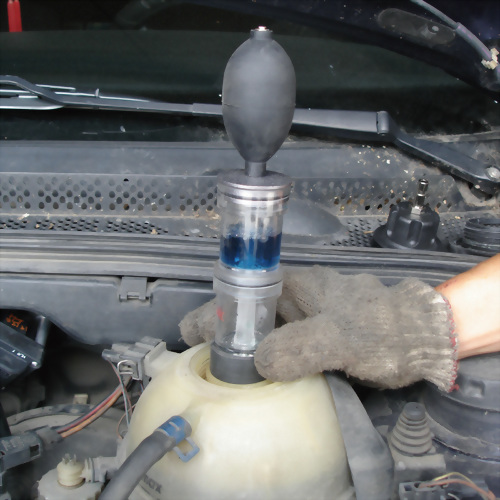
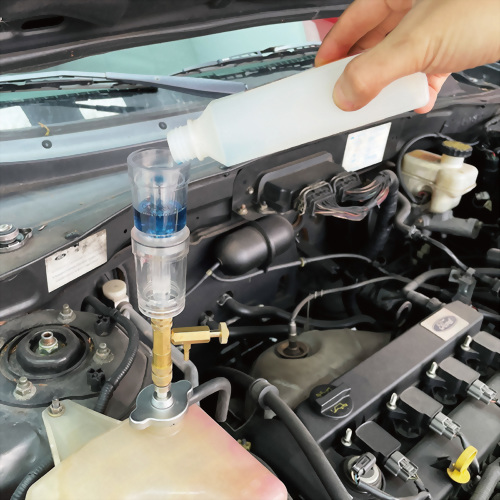
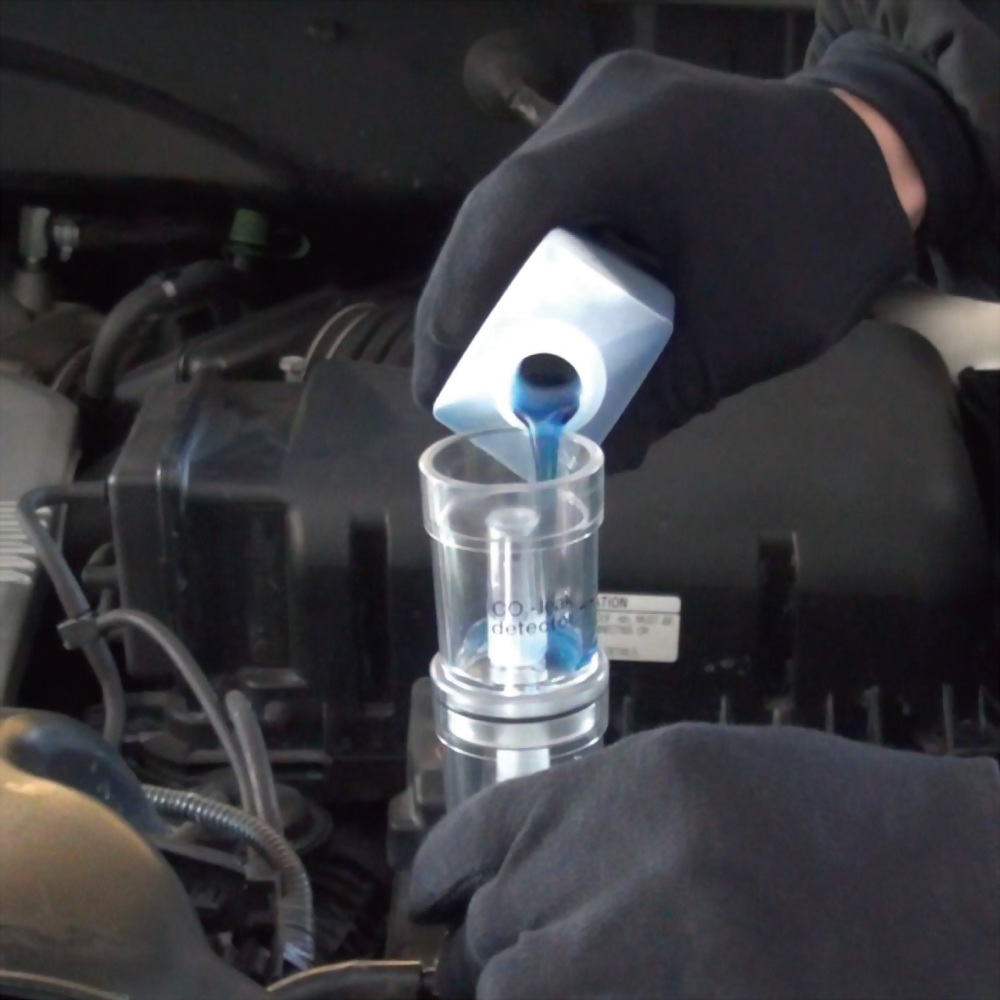
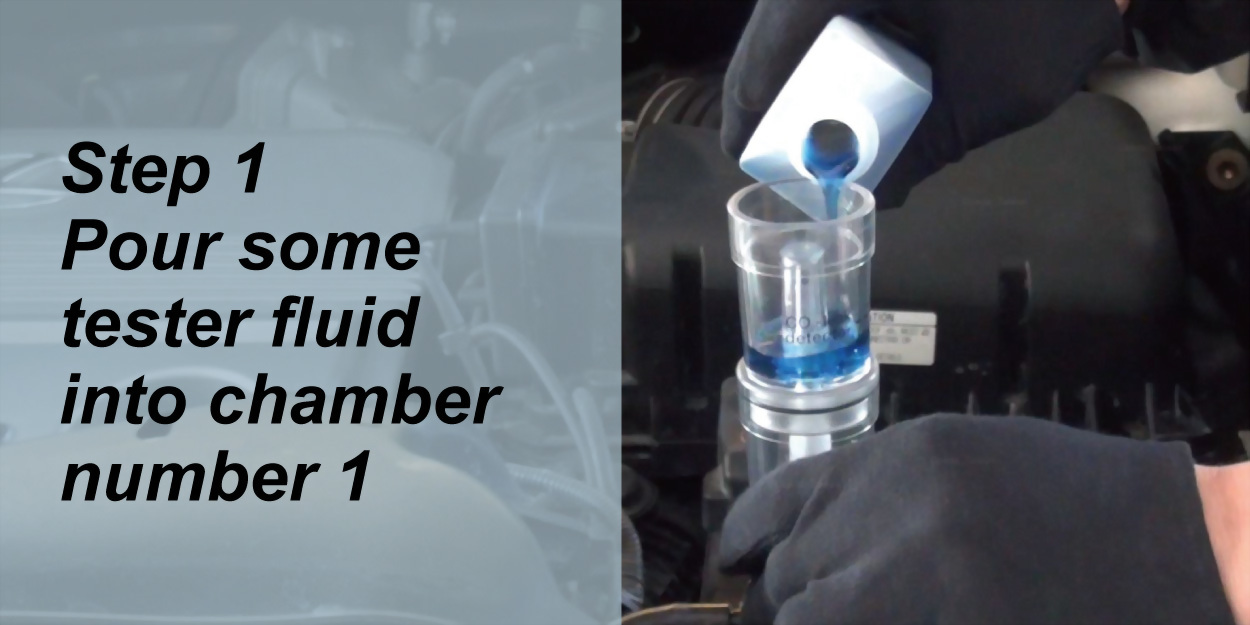
When working with this tool, simply use the cone-shaped adapter at the bottom of the test tube to the radiator filler neck or on the expansion tank’s opening. Pour some tester fluid to the top chamber of the test tube to the dotted line indicated on the surface. Turn on the engine and let the engine run for a while to let the cooling system temperature build up. If there's CO2 in the vapor from the cooling system, then it means that there's a chance that the exhaust gas from the combustion chamber has leaked into the cooling system. The presence of CO2 will also cause the tester fluid to change color from blue (the original color) to green (if CO2 is found) or even to yellow (if CO2 is abundant). With this method, you can easily check if the head gasket is worn. After verifying the condition of the head gasket, you can remove the cylinder head with confidence.
COSDA also has another tool set similar to this one but with additional three steel cap adapters with a part number of SD-1025B which can be seen at the bottom of this page. That set has a direct fit feature and very easy to assemble to the car.
The high quality tester fluid is made in USA and can be reused up to 5 times (sometimes even more). If the tester fluid changes color to green or yellow, leave it in the empty bottle provided, and the color turns back to blue after a while.
This tool kit is developed and manufactured by Cosda Manufacturing Company, a leading automotive tool manufacturer in Taiwan focusing on producing innovative tools that can help mechanics around the world to increase their work efficiency and working quality. If you find our tools interesting and want to purchase from us, simply write to us. We are specialized in doing B2B businesses and we do private branding services to the major and renowned brands in the world. Hope to hear from you soon!
Key Features
✅Initial
head gasket diagnosis without removing the cylinder head
When the engine shows signs
such as overheating or unexplained coolant loss, the tool can be used to check
whether CO2 is present in the cooling system as an initial indicator of a
possible head gasket issue. This helps narrow down the problem before
disassembly and supports more informed repair decisions.
✅Blue-to-green/yellow
color change for quick visual reading
The test fluid is originally
blue and turns green or yellow if CO2 is detected in the vapor sample. This
makes the result easier to read on site and helps improve inspection
consistency and communication efficiency.
✅Rubber
bulb draws vapor into the chamber for simple operation
The rubber bulb is used to
draw vapor from the radiator or coolant reservoir into the test chamber, where
the fluid indicates whether combustion gas has entered the cooling system. No
complex electronic equipment is required, making it suitable for repair shops
and service stations to build a standard inspection process.
✅Includes
U.S.-made CO2 test fluid with MSDS and SVHC information
The kit includes U.S.-made
CO2 test fluid and provides MSDS and SVHC compliance information. This is
useful for purchasing evaluation, product listing, staff training, and internal
item management.
✅Test
fluid can be stored and reused for better consumables control
After the fluid changes color, it can be poured back into the included empty
bottle and reused once the original color returns. For workshops that regularly
inspect cooling system issues, this helps reduce consumables cost per test and
improves inventory control.
Industry Background
Why Does Combustion Gas Enter the Cooling System?
Under normal operating conditions, combustion gases generated inside the engine should remain confined within the combustion chamber and be expelled through the exhaust system.
However, an engine actually contains three separate systems operating in close proximity:
• Combustion chamber (high-temperature, high-pressure gases)
• Cooling system (circulating coolant)
• Lubrication system (engine oil circulation)These systems are sealed and separated primarily by the head gasket.
What Happens When the Seal Fails?
When the head gasket deteriorates due to aging, overheating, or deformation, its sealing capability can be compromised.
As a result, high-pressure combustion gases may escape from the combustion chamber and enter the cooling system through weakened or damaged areas.
Because the pressure inside the combustion chamber is significantly higher than in the cooling system, these gases are forced into the coolant passages, leading to abnormal gas accumulation.
What Causes This Condition?
Common causes include:
• Long-term exposure to high temperatures leading to material degradation
• Engine overheating causing cylinder head distortion
• Localized wear, fatigue, or burn-through of sealing surfacesIn many cases, these issues begin internally without obvious external symptoms.
Why Is This a Concern?
The presence of combustion gases in the cooling system can trigger a series of negative effects:
• Reduced cooling efficiency: Gas pockets can disrupt coolant circulation
• Unstable temperature control: Increased risk of localized overheating
• Abnormal system pressure: Additional stress on the radiator and hoses⚠️If the condition worsens, it may eventually affect the lubrication system, leading to oil contamination and reduced lubrication performance.
The Key Challenge: Difficult to Detect Early
In the early stages, this type of leakage often shows no clear external signs.
However, internal pressure changes and gas intrusion may already be affecting system performance.
By the time noticeable symptoms appear, the issue may have progressed to a more serious level.
Solutions
Solution 1 – Private Label Branding for Combustion Gas Leak Testers
Turn this combustion gas leak tester into a branded diagnostic tool with custom reagent bottle labels and carry case labels, helping tool brands and distributors build a more recognizable private label product.
Key Benefits:
• The tester fluid label can be customized with your logo and product information, helping create a more professional private label combustion gas leak tester.
• The blow molded case label can also be redesigned to match your brand image for workshop, retail, and distribution channels.
• Matching bottle and case labels help improve consistency across your automotive diagnostic tool range.
• This solution is ideal for tool brands, importers, and distributors looking to build a more recognizable in-house product line.
Solution 2 – Laser Logo Marking on Adapters for Branded Diagnostic Tools
Add laser logo marking to the adapter surface to give this block tester kit a cleaner and more professional branded appearance.
Key Benefits:
• The adapter surface can be laser marked with your logo, adding a refined custom detail to the tester.
• Laser marking helps strengthen product identity while keeping branding clean and durable on the tool surface.
• This detail makes the product look more complete as part of a private label diagnostic tool range.
• It is a practical customization option for buyers who want a more premium-looking automotive testing tool.
Solution 3 – Custom Color Options for CO2 Leak Tester Kits
Use custom colors to make this CO2 leak tester kit stand out in the market and better match your brand identity.
Key Benefits:
• The case can be changed to black, blue, or other special colors for a more distinctive custom color combustion gas leak tester.
• You can provide your Pantone or color reference, and we will confirm the MOQ based on the selected color.
• Custom colors help create a more unified look across your automotive diagnostic tool product line.
• This is a practical solution for brands that want a more recognizable and differentiated testing kit.
Solution 4 – Multi-Language Manuals for Global Automotive Tool Sales
Support local market sales with a multi-language instruction manual, making this combustion leak tester easier to understand and sell in different countries.
Key Benefits:
• The instruction manual can be printed in your local language; you only need to provide the translated file.
• A localized manual makes this cooling system diagnostic tool easier for end users to understand and use correctly.
• It helps importers and distributors prepare a more complete OEM automotive tool solution for non-English-speaking markets.
• This is a practical way to adapt one combustion gas leak tester kit for multiple countries without changing the core product structure.
Q&A
Q1. What kind of problems can this kit help detect?
A: This kit is mainly used to identify head gasket wear or combustion gas leaking into the cooling system, helping diagnose issues related to engine overheating or abnormal coolant loss.
Q2. How does it determine whether a leak is present?
A: Tester fluid is poured into the chamber, and the rubber bulb is used to draw vapor from the radiator or expansion tank opening into the test chamber. If CO2 is present in the vapor, it may indicate combustion gas leakage into the cooling system.
Q3. Where is the tester fluid made, and does it meet compliance requirements?
A: The kit includes US-made CO2 tester fluid, and the product page states that it complies with MSDS and SVHC requirements.
Q4. Can the tester fluid be reused?
A: Yes. The product page states that the high-quality tester fluid can be reused up to 5 times, sometimes even more. If it turns green or yellow, it can be left in the included empty bottle and may return to blue after a while.
Q5. Does the engine need to be running and warmed up during the test?
A: Yes. The product page instructs users to fill the tester fluid to the indicated line, then start the engine and let the cooling system temperature build up for a while before drawing vapor into the test chamber with the bulb pump.
| Package | Blow molded case (red) | |
| Packing | 10 sets in a master carton | |
| Weight per set | 1.3 kg | 2.8 lbs |
| Net weight per carton | 12.5 kg | 27.5 lbs |
| Gross weight per carton | 13.5 kg | 29.7 lbs |
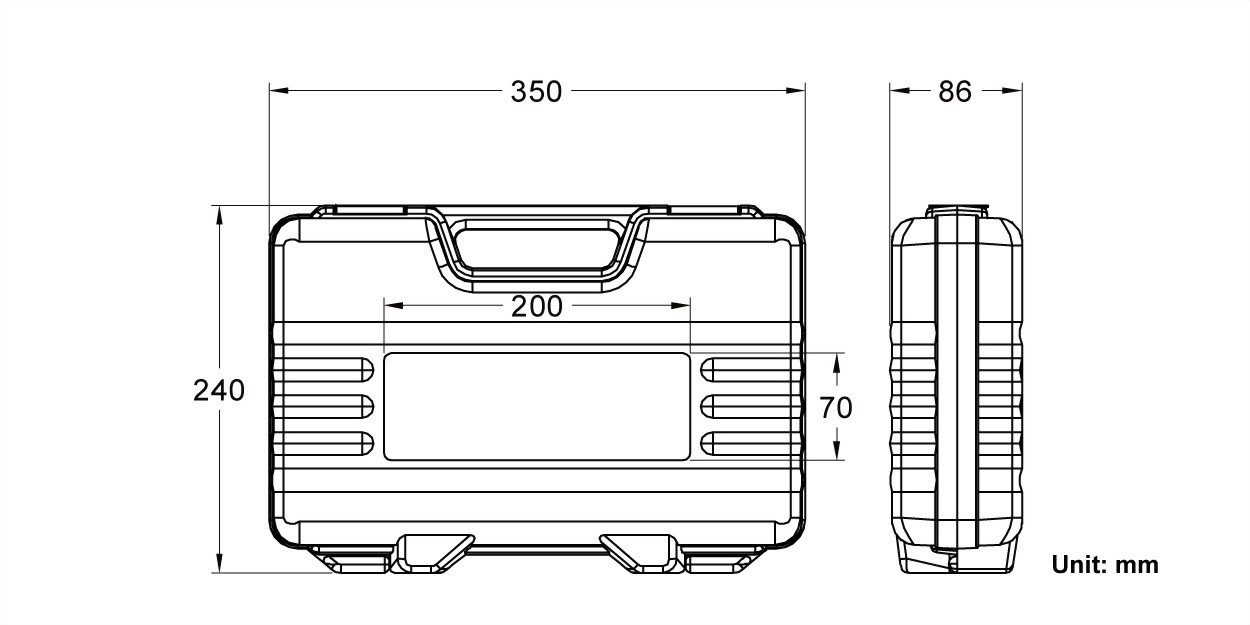
| Size per set | 35.0 × 24.0 × 8.6 cm | 13.8 × 9.4 × 3.4 inch |
| Size per carton | 49.5 × 44.5 × 36.5 cm | 19.5 × 17.5 × 14.4 inch |
| Volume per carton | 0.08 CBM | 2.8 CUFT |
| Case label size | 20.0 × 7.0 cm | 7.7 × 2.7 inch |
| No. | Image | Cosda No. | Description | |||||
|---|---|---|---|---|---|---|---|---|
| 1 | 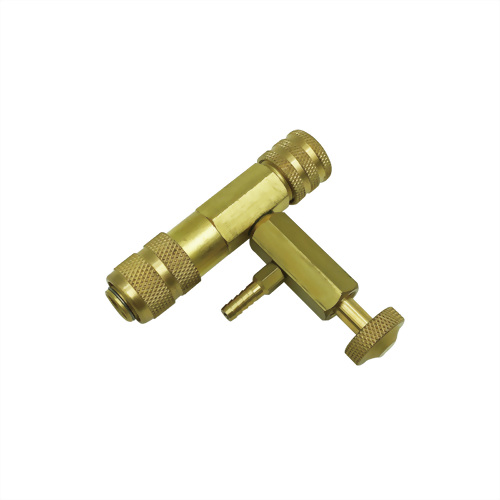 |
SD-1025-1 | Release Valve and Connector | More |
||||
|
- Specifications
|
||||||||
|
|
||||||||
| 2 | 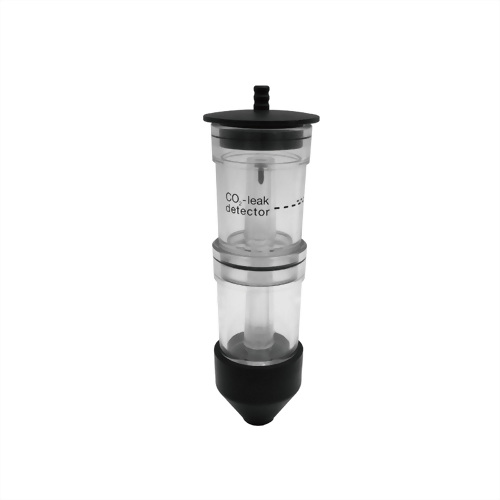 |
SD-1025-2 | Vertical Test Chamber | More |
||||
|
- Specifications
|
||||||||
|
|
||||||||
| 3 | 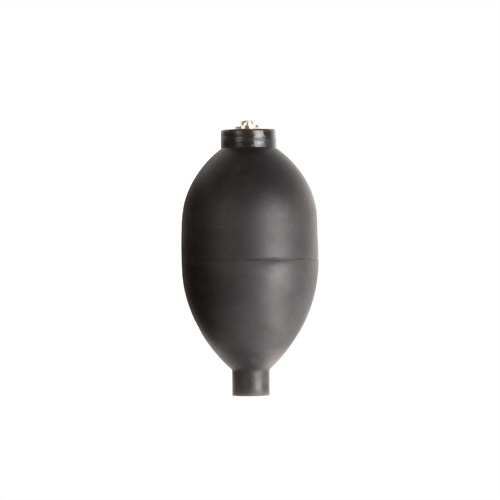 |
SD-1025-3 | Rubber Bulb Pump | More |
||||
|
- Specifications
|
||||||||
|
|
||||||||
| 4 |  |
SD-1025-4 | CO2 Tester Fluid (250 ml) | More |
||||
|
- Specifications
|
||||||||
|
|
||||||||
| 5 | 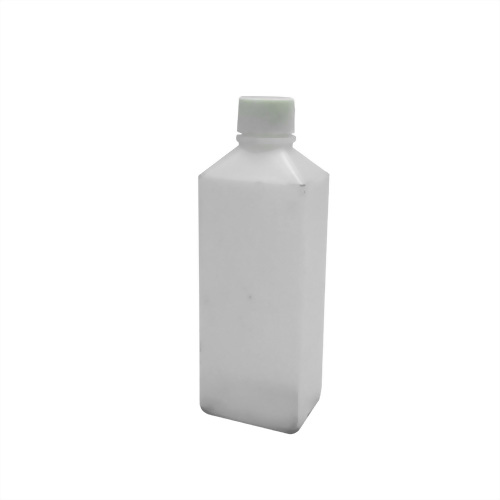 |
SD-1025-05 | Empty Bottle (250 ml) | More |
||||
|
- Specifications
|
||||||||
| Suggested HS code |
90318000909 |
| MOQ with laser marking | 20 sets |
| MOQ without laser marking | 10 sets |
| Logo printing cost | + TWD 3 on tester tube with TWD 2,000 tooling cost |
|
Logo printing MOQ |
100 sets |
| Not for sale in | China |