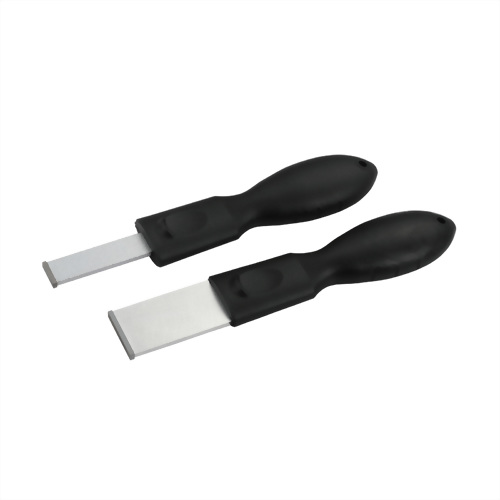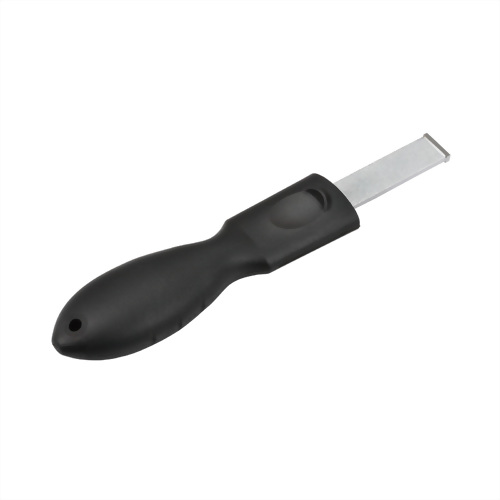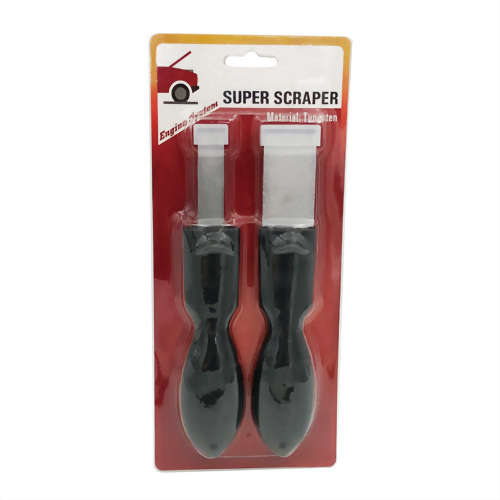

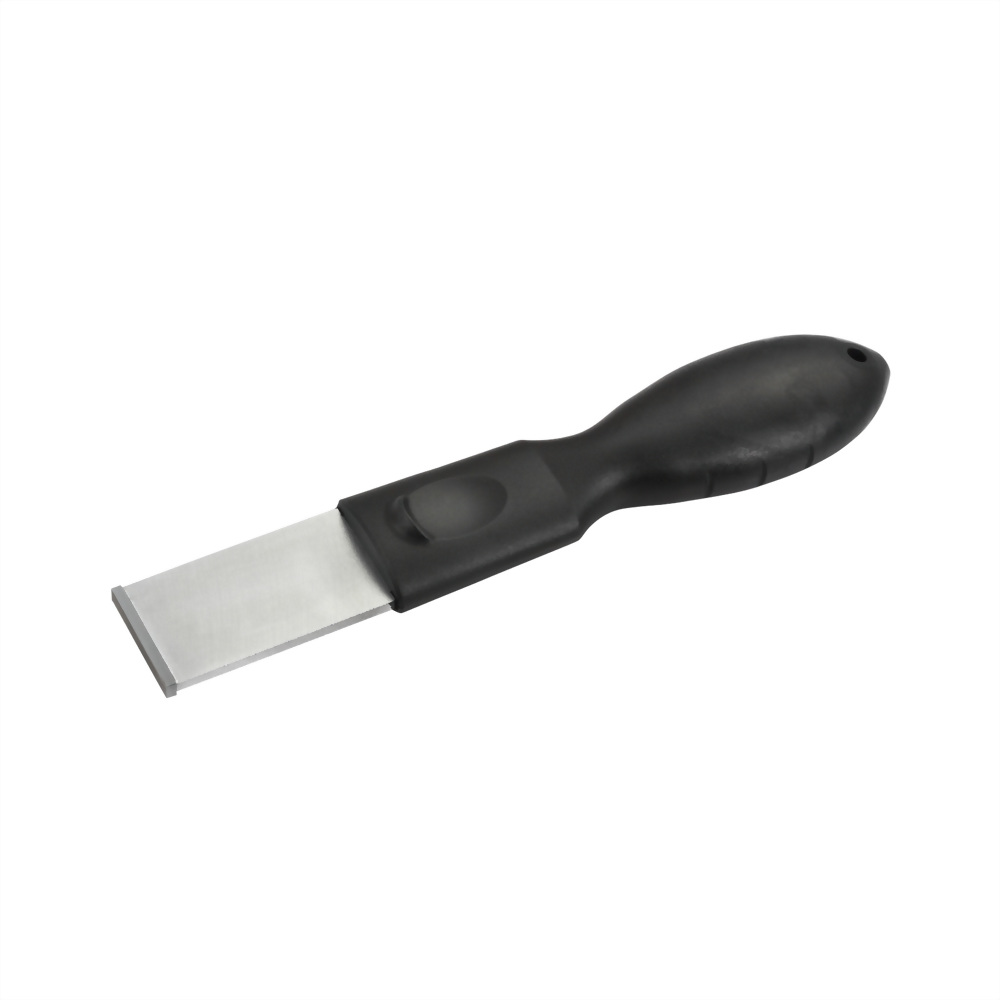
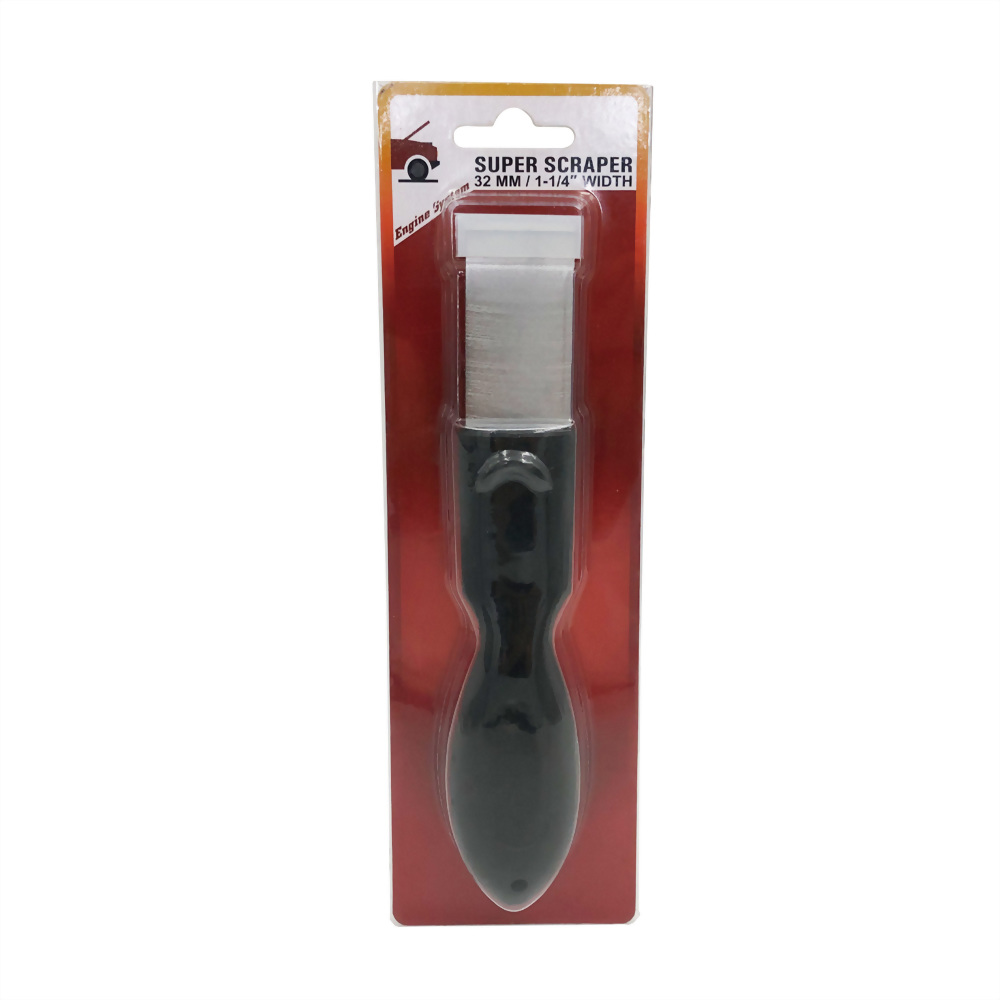
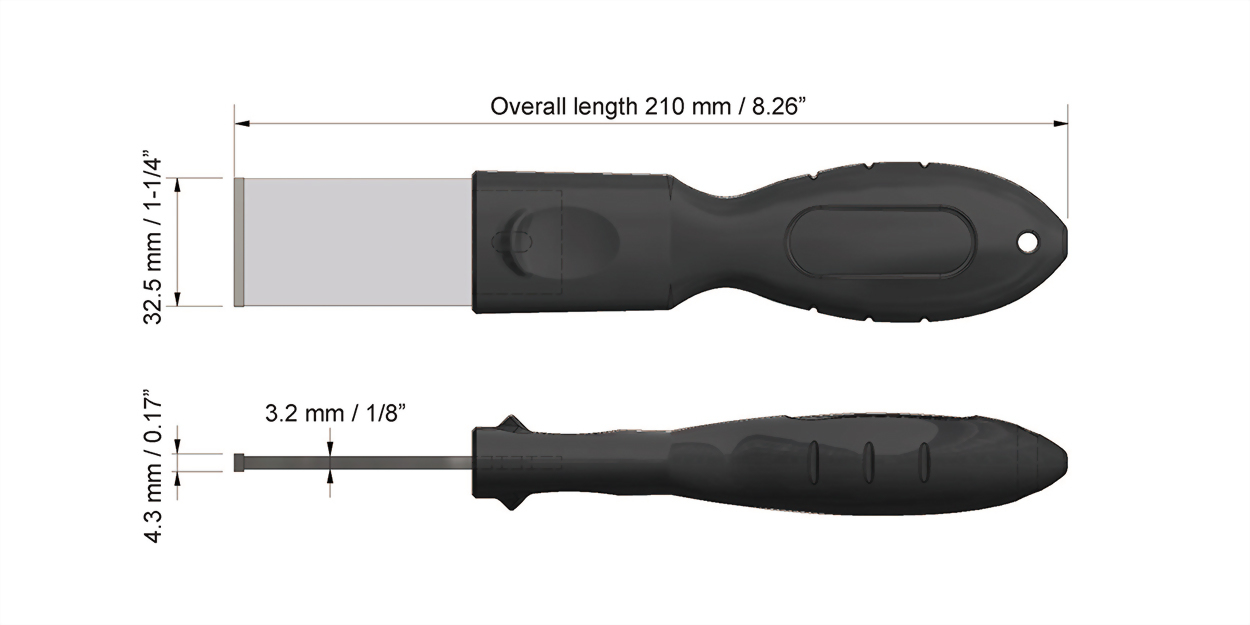
High Hardness Tungsten Carbide Scraper (32.5 mm / 1-1/4” Width)
• Finely ground carbide double edges scrape residues off without leaving a damage on the surface
• Premium tungsten carbide tip remains sharp for an extended period of time
• Ergonomic handle design offers comfortable grip
High Hardness Tungsten Carbide Scraper 32mm
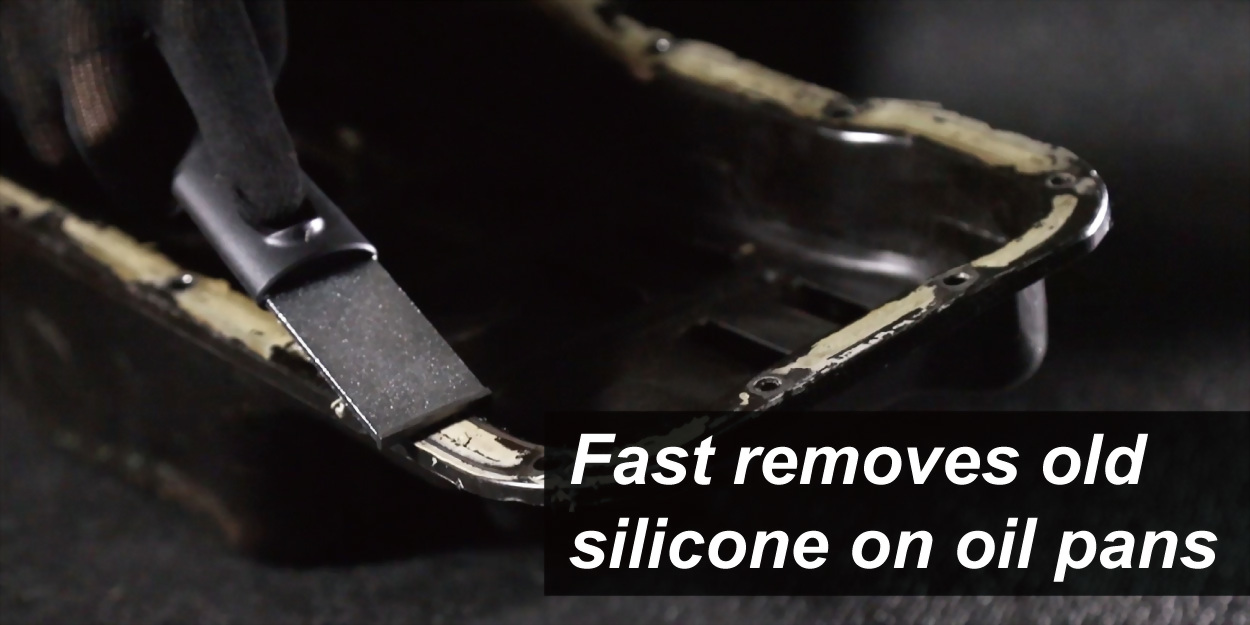
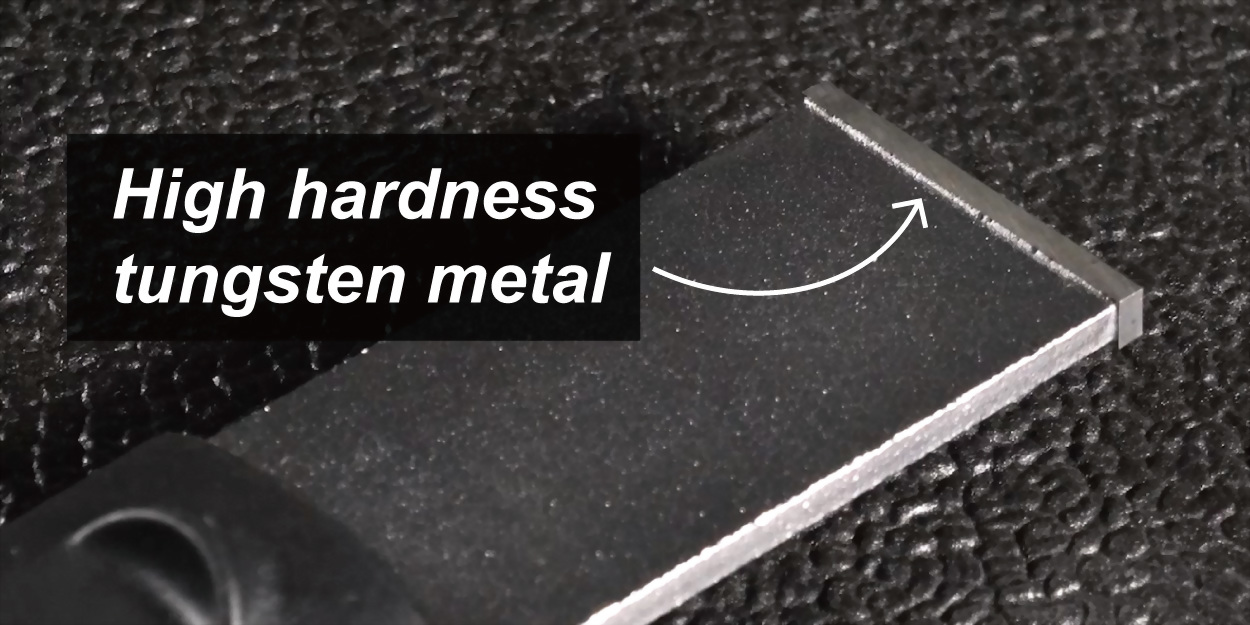
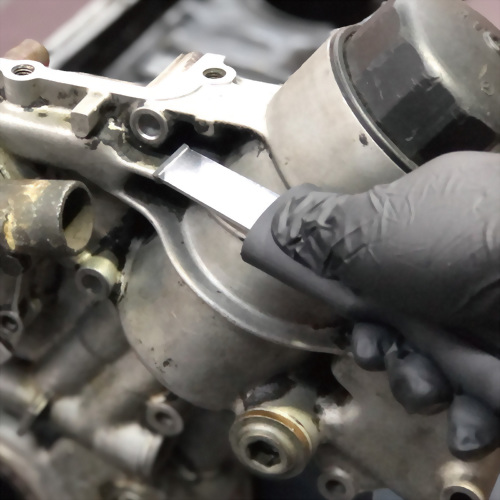
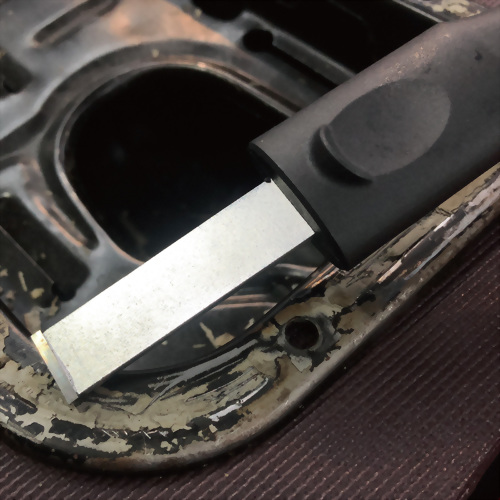
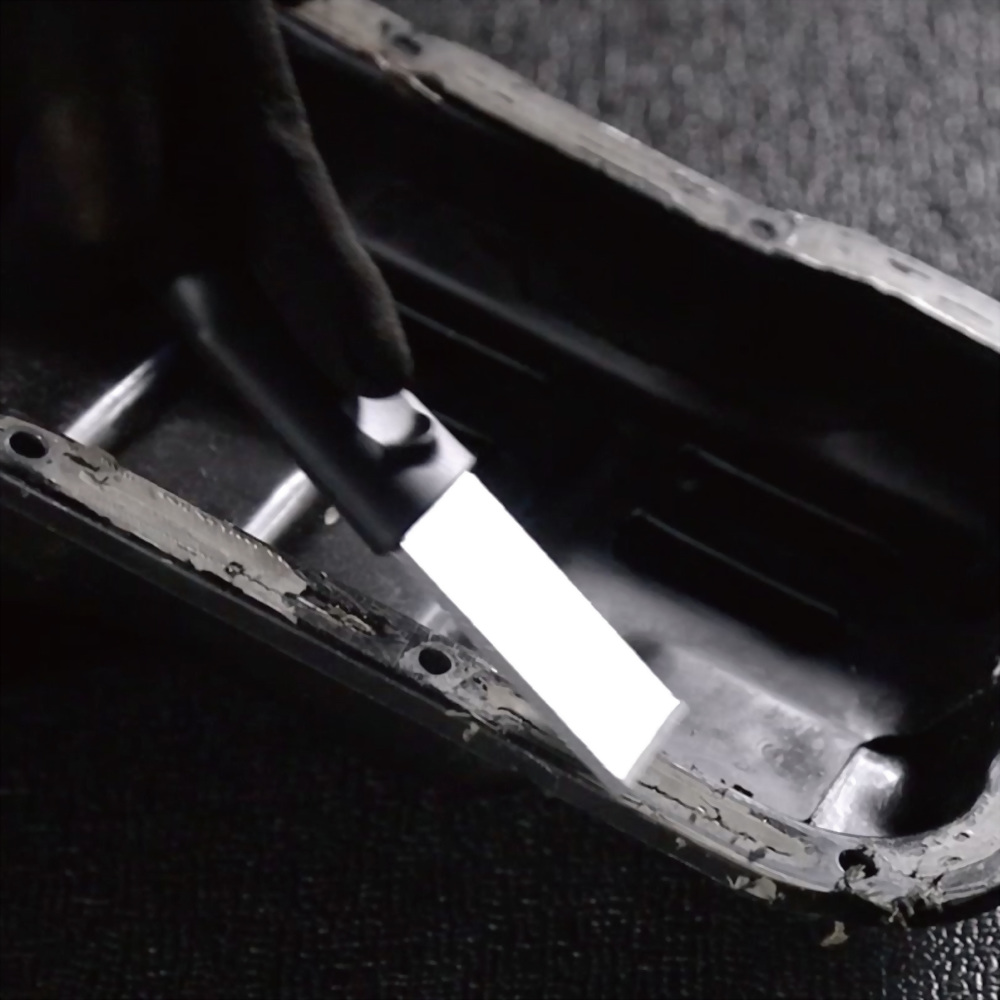
Have you ever encountered a situation when you are trying to remove an oil pan, transmission pan, or valve covers, and the someone before you just coated everything some strong glue, silicon, or adhesive, and then you spent hours just to try to clean up the remaining stuff. Maybe this scraper tool is here to solve your problem. The amazing functions that this scraper can do cannot be seen directly. The top of the scraper is made of the high hardness tungsten carbide material that doesn't really go dull. Not only does the high hardness makes it easy to scrap off the adhesive and stuff, but also the squared off edges of the scraper that makes it even easier to do the job. The tool is designed and manufactured by Cosda Manufacturing Company, and Cosda focuses on producing innovative tools that can help the mechanics to work in a safer, faster, and more efficiency way. Cosda specializes in precision CNC manufacturing, and the scraper tip is precisely made and polished to the high standard with Cosda's 40+ years of manufacturing experience.
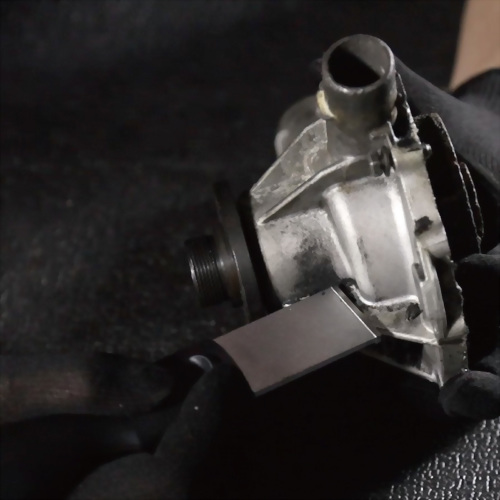
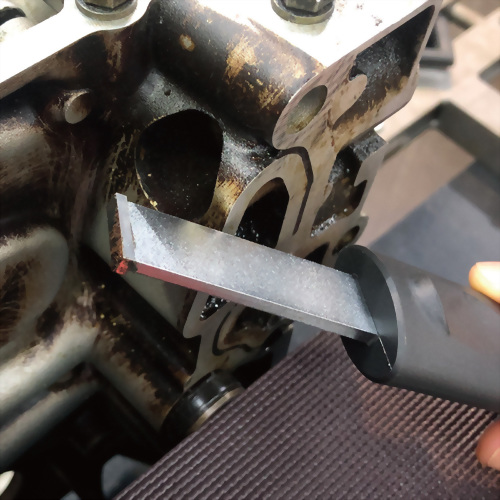
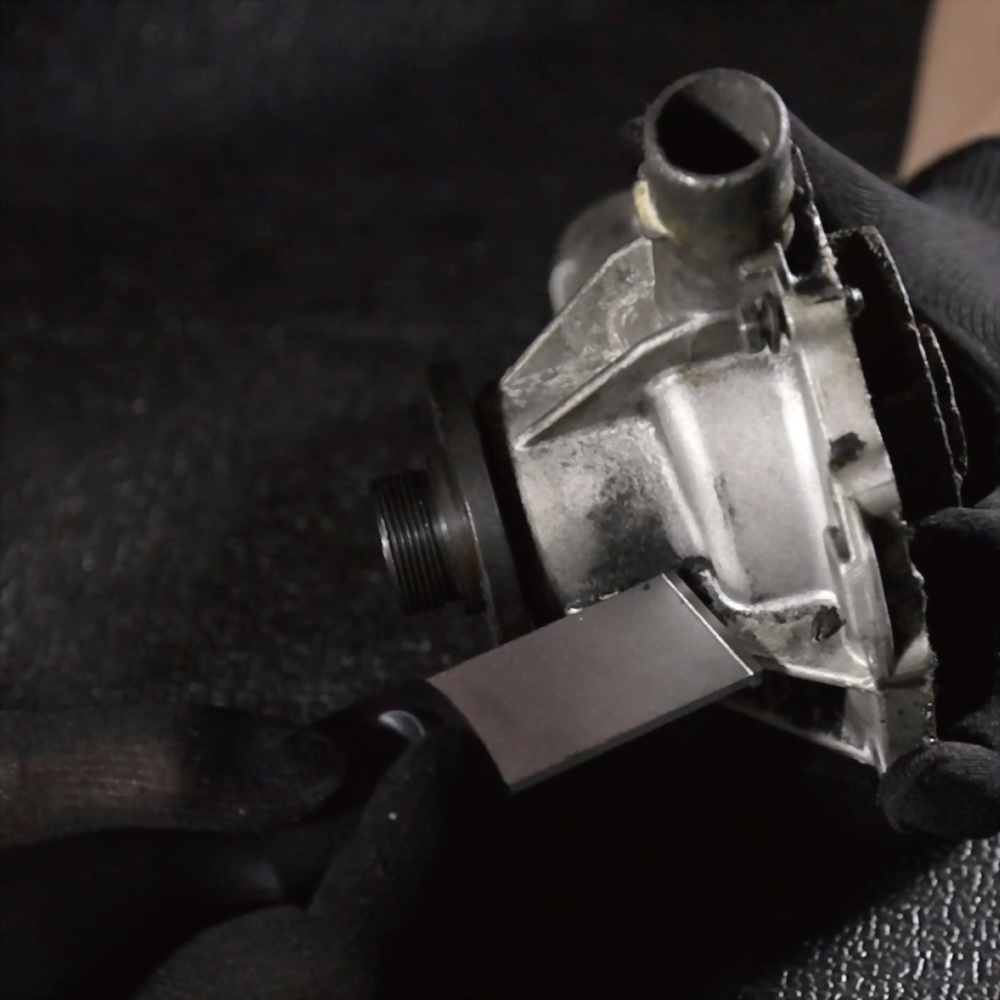
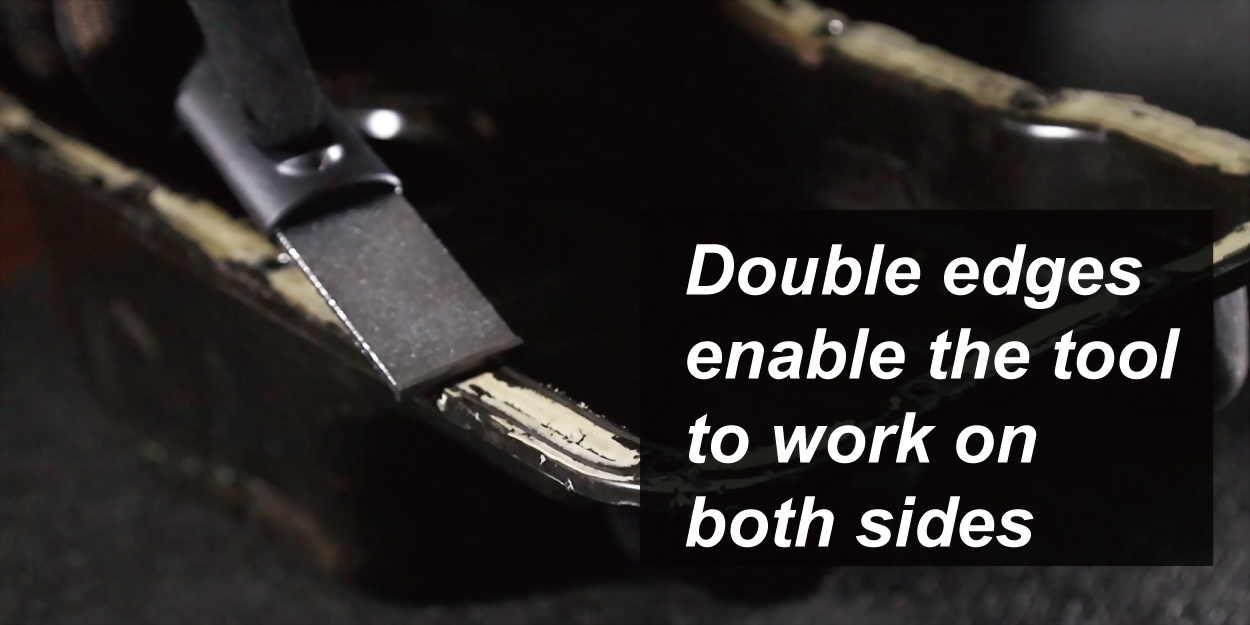
When working with this high hardness scraper tool, simply grab the ergonomic handle with a comfortable grip, and scrap off the old adhesive back and forth while applying some pressure. One amazing feature that this scraper has is that it can work from the wide and narrow sides. The wide side can work on large pieces or a wide area, and the narrow side can work on hard-to-reach spots, such as some places with 90 degree grooves. But just be careful sometimes you may create some scratches on the surface because the high-hardness tungsten carbide material is much harder than the aluminum alloy oil pans but the scratches won't create potential problems actually.
Key Features
1. Built for common cleaning pain points—faster removal of silicone, carbon buildup, and rust
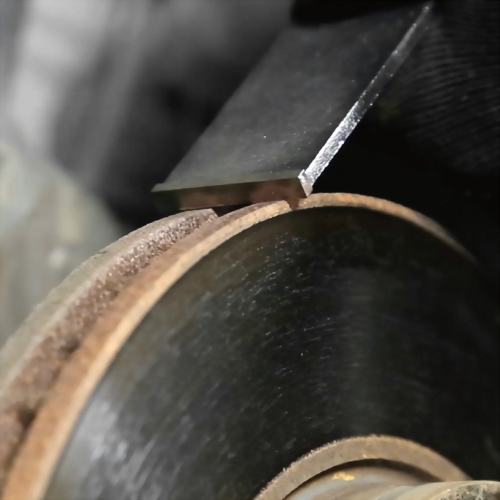
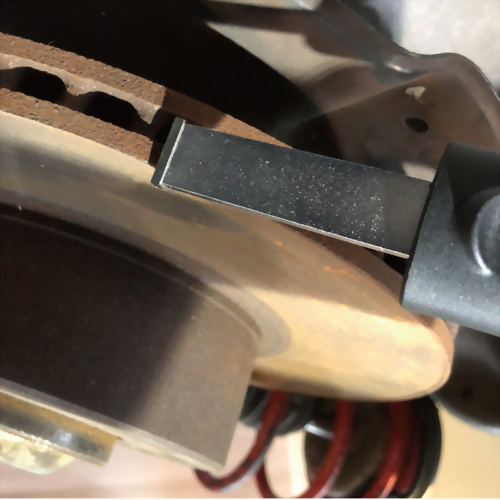
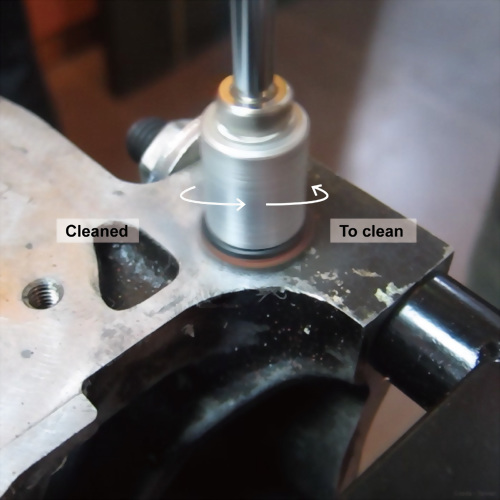
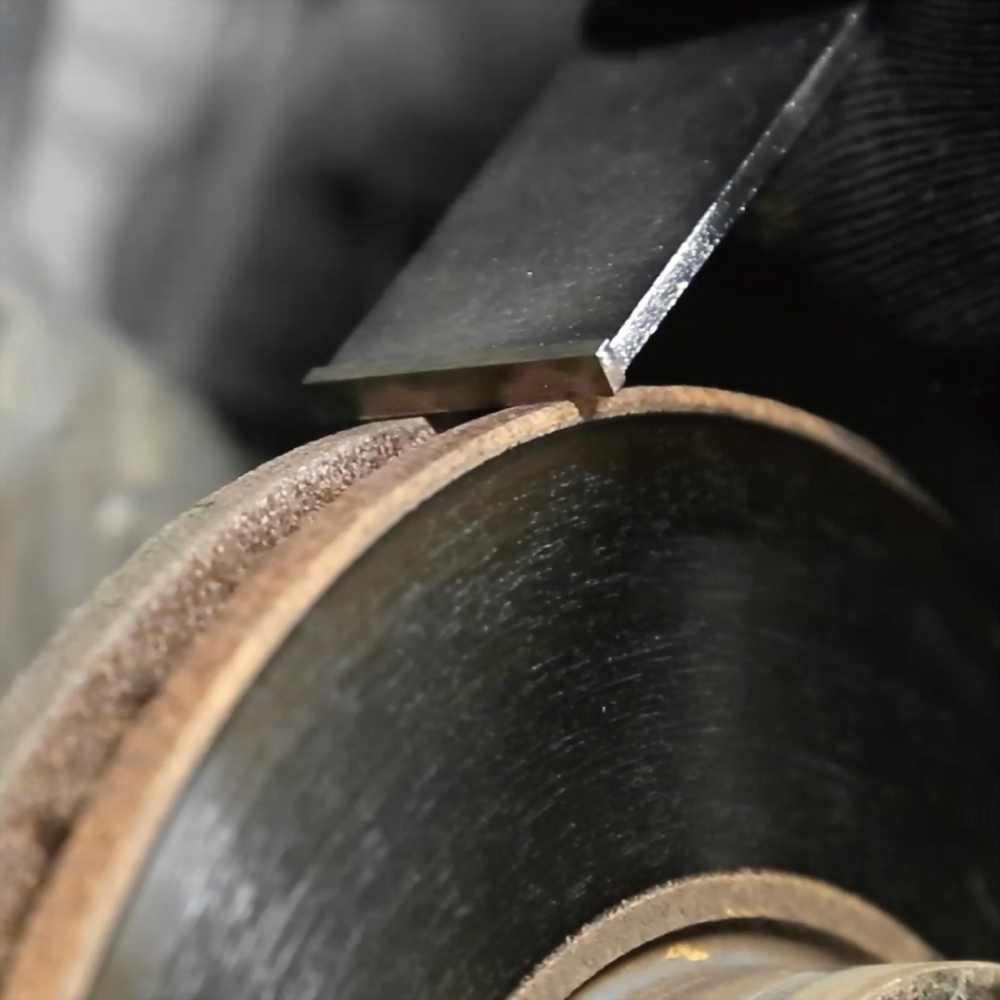
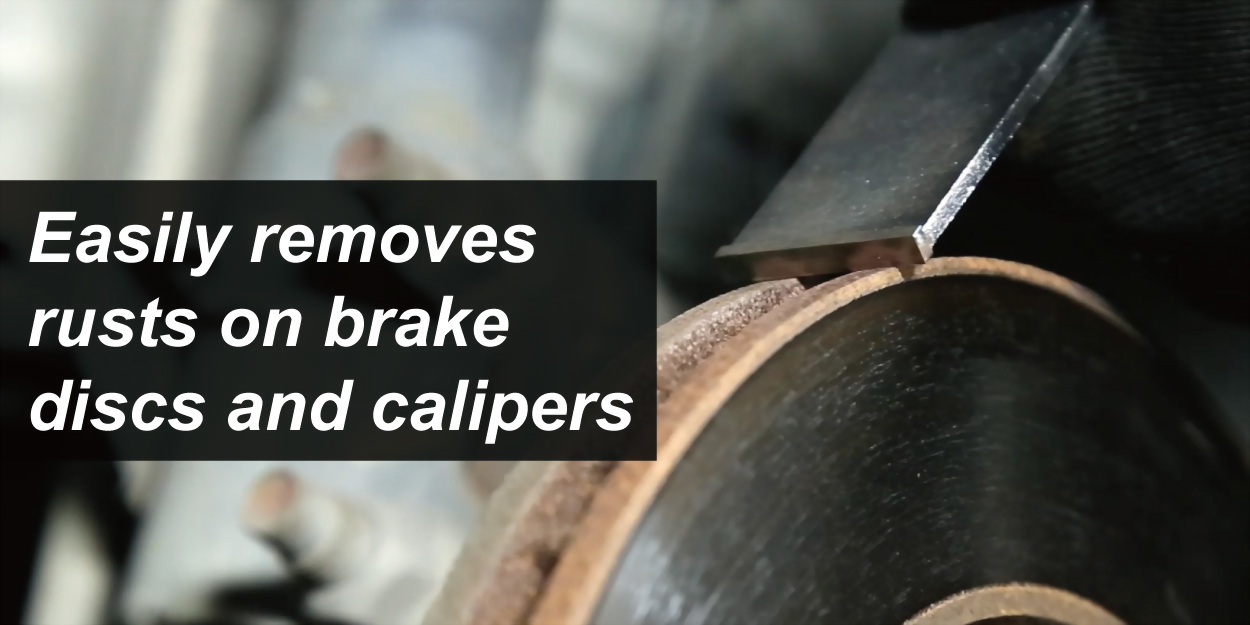
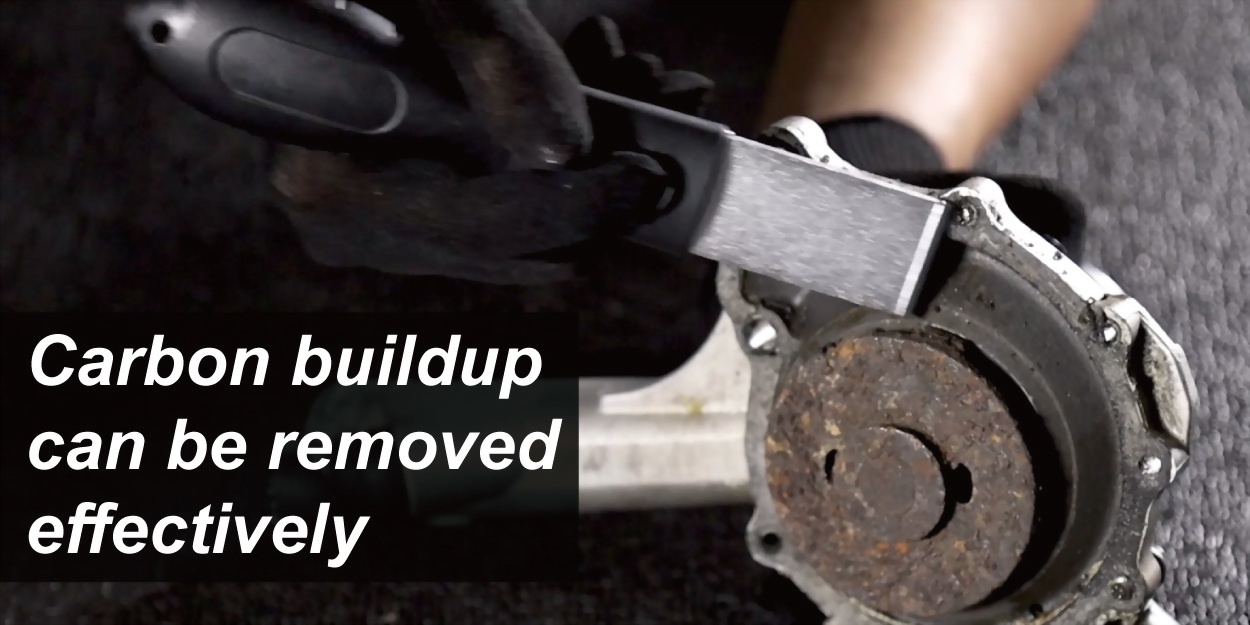
Designed for typical cleanup tasks on oil pans, transmission pans, and valve covers where old silicone/sealant is hard to remove, as well as carbon buildup on exhaust manifolds and rust on brake calipers. One tool covers multiple work areas and helps reduce tool switching and repeated scraping time.
2. Precision-ground
tungsten carbide dual edge—clean scraping with better control
The precision-ground dual-edge blade helps lift residues off the surface
efficiently, making it quicker to prepare for a new gasket or reassembly. The
scraping angle is easier to control, reducing the likelihood of surface damage.
3. High-hardness
carbide tip—stays sharp longer
The tungsten carbide tip maintains sharpness for extended use, helping keep
scraping performance consistent during long jobs. A stable cutting edge also
reduces the risk of applying excessive force as the blade dulls.
4. 32.5 mm wide
blade—handles both large surfaces and tight corners
The 32.5 mm blade width removes large-area residues quickly, while the blade
edge can also reach corners, grooves, and recessed areas. This keeps the
workflow smooth without needing to switch to a smaller scraper.
5. Controlled
scraping guidance for aluminum parts
Carbide is harder than aluminum components (such as aluminum oil pans). If the
angle is too steep or force is excessive, fine scratches may occur. Use a low
scraping angle and light, staged pushes, focusing on lifting residues to
balance efficiency and surface protection.
Background Knowledge: Why Do Stubborn Residues Appear During Automotive Repairs?
During automotive maintenance and repair work, technicians frequently encounter various types of residues attached to metal surfaces. These residues generally originate from two main sources: Assembly materials, such as RTV sealants or gasket remnants used during installation;Operational deposits that develop over time, including carbon buildup, sludge, or metal oxidation
1. Residual Sealants and Adhesive Materials
In components such as engines and transmissions, many mating surfaces are sealed with RTV silicone or other sealing materials to prevent fluid leaks.
When these parts are disassembled for maintenance or reassembly, the sealing materials often remain on the metal contact surfaces. After prolonged exposure to heat cycles and mechanical pressure, the sealant gradually hardens and adheres firmly to the surface, making it more difficult to remove.
2. Carbon Deposits in High-Temperature Environments
Exhaust system components operate under extremely high temperatures. Over time, combustion by-products and oil vapors may accumulate on metal surfaces and gradually form carbon deposits.
These deposits often develop into hardened, layered structures that bond tightly to the metal surface.
3. Metal Oxidation and Rust Formation
Brake system and chassis components are regularly exposed to moisture, road salts, and environmental contaminants. When metal surfaces react with oxygen and moisture, oxidation layers or rust may form and accumulate on the components.
4. Why Are These Residues Difficult to Remove?
Residues can be difficult to remove due to several factors:
- Heat curing – Sealants and oil contaminants can harden after prolonged exposure to high temperatures
- Chemical adhesion – Certain sealing materials can bond strongly to metal surfaces
- Long-term buildup – Carbon deposits and corrosion layers gradually become thicker over time
- Surface geometry – Grooves, edges, and recessed areas tend to trap residues and limit access
Because of these factors, removing surface deposits and residual materials is a common task in automotive maintenance and overhaul work. The hardness and adhesion of these residues can vary depending on the component and material involved, which is why technicians frequently encounter this type of cleaning work during routine service procedures.
Solutions
Tungsten Carbide Gasket Scraper Tool
Gasket Removal & Surface Cleaning Tools
OEM and private label customization solutions for tungsten carbide gasket scraper tools, designed for automotive tool brands, engine repair workshops, and professional maintenance technicians.
Solution 1 – Laser Marked Tungsten Carbide Scraper for Private Label Programs
Turn this tungsten carbide gasket scraper tool into a laser marked surface cleaning tool for automotive tool brands, private label programs, and distributors.
Key Benefits
- The scraper surface can be laser marked with your logo, creating a branded gasket scraper tool for engine service and maintenance work.
- Laser marking provides durable identification even in heavy-duty gasket removal and surface cleaning applications.
- Suitable for OEM automotive tool programs, private label engine repair tools, and aftermarket maintenance tools.
Solution 2 – Logo Printed Handle for Branded Scraper Tools
The handle can be printed with your logo to create a branded gasket scraper and sealant removal tool.
Key Benefits
- The handle can be printed with your logo, improving brand visibility during daily engine repair and gasket removal work.
- A branded scraper tool is frequently used during engine maintenance, gasket cleaning, and surface preparation, making it a practical promotional tool.
- Suitable for automotive tool brands, distributors, and maintenance tool programs.
Solution 3 – Custom Handle Color for Brand Identity
Handle color can be customized to match corporate colors and brand identity.
Key Benefits
- Handle color can be changed to match your company color, helping build a consistent tool product line.
- Customers need to provide Pantone color code, and MOQ will be confirmed accordingly.
- Ideal for private label tool brands and OEM automotive tool programs.
Solution 4 – Professional Gasket Removal & Surface Cleaning Solution
This tungsten carbide scraper tool is designed for heavy-duty gasket removal, sealant removal, carbon cleaning, and rust removal.
Key Benefits
- The tungsten carbide tip remains sharp for a long time, making it suitable for repeated gasket removal work.
- Double-edge design allows use on wide surfaces and narrow areas.
- Ideal for engine repair, oil pan gasket cleaning, brake caliper rust removal, and surface preparation before gasket installation.
Solution 5 – OEM & Multi-Market Maintenance Tool Programs
Support OEM tool programs and global distribution of gasket scraper and surface cleaning tools.
Key Benefits
- Branding, handle printing, and color customization can be adjusted for different markets and tool brands.
- Suitable for automotive tool distributors, engine repair tool suppliers, and maintenance tool brands.
- Keeps product structure consistent while supporting global aftermarket tool programs.
Q&A
Q1. Will it damage the surface?
A: The finely ground double edges help remove residue without damaging the surface when used properly; however, tungsten carbide is much harder than softer metals (e.g., aluminum), so improper force/angle may cause scratches—use controlled pressure and a shallow angle.
Q2. What does “double edges” mean in real use?
A: It features double edges—use the wide side for larger areas and the narrow side for hard-to-reach spots such as tight corners or 90-degree grooves.
Q3. What’s the recommended way to use it?
A: Hold the ergonomic handle and scrape back and forth with appropriate pressure. Start with a shallow angle and work in sections to reduce the risk of surface marks.
Q4. If I need a more complete set instead of a single scraper, what related options are available?
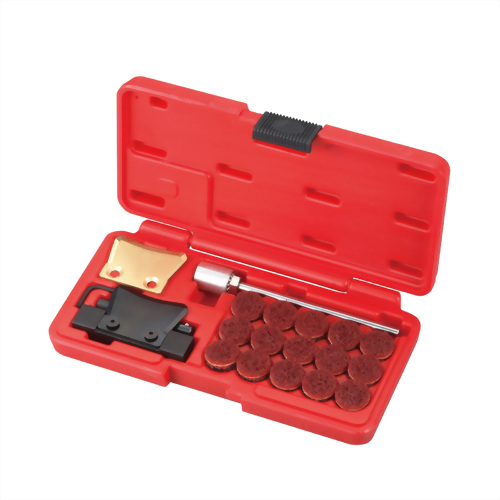
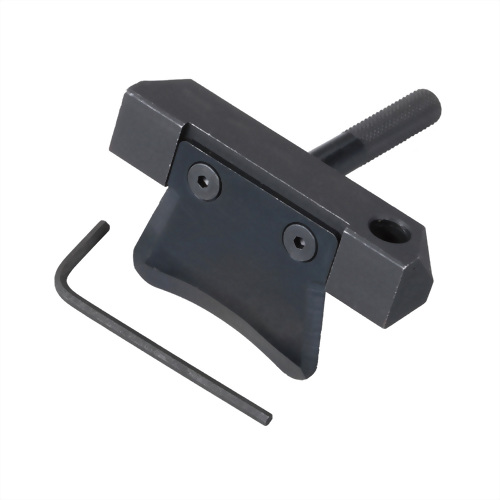
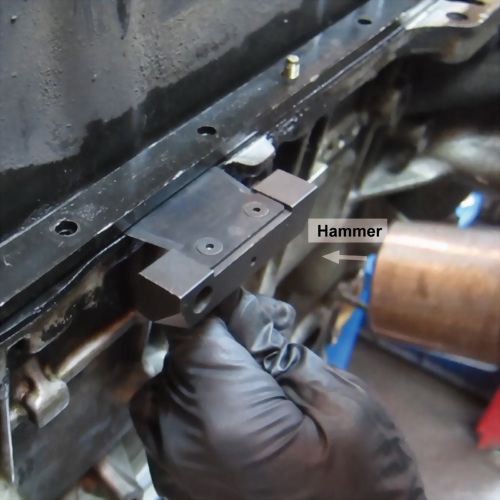
A: The related products section lists several extended options, including SD-1043 High Hardness Tungsten Carbide Scraper Set (2 pcs), SD-1040C Replaceable Gasket Separator and Clean Set (21 pcs), and SD-1040A Replaceable Gasket Separator (4 pcs), allowing users to choose between a single scraper, a multi-piece scraper set, or a replaceable cleaning system.
Q5. Besides oil pans and exhaust manifolds, what other cleaning jobs is it suitable for?
A: In addition to removing old silicone from oil pans, carbon buildup on exhaust manifolds, and rust on brake calipers, the page also shows it can be used to remove labels, stickers, window film, decals, and other adhesive residues, making it suitable for a wide range of cleanup tasks.
| Package | Sliding card + blisters | |
| Packing | 10 sets in an inner carton, 40 sets in a master carton | |
| Weight per set | 190 g | 0.4 lbs |
| Net weight per carton | 8.0 kg | 17.6 lbs |
| Gross weight per carton | 9.0 kg | 19.8 lbs |
| Size per set | 26.4 × 7.8 × 3.0 cm | 10.4 × 3.0 × 1.2 inch |
| Size per carton | 64.2 × 18.8 × 29.7 cm | 25.2 × 7.4 × 11.7 inch |
| Volume per carton | 0.035 CBM | 1.2 CUFT |
| Suggested HS code |
82059000008 |
| MOQ with laser marking | 80 sets |
| MOQ without laser marking | 40 sets |
| Laser marking cost | + TWD 4 |
| Not for sale in | Australia, USA |